A Belated International Men’s Rights Day

This entry was originally inspired by me being banned from Reddit’s r/feminism community.  It made me sad.  It’s a community I had followed for some time and while I didn’t agree with some of what was being said, I was there to learn.  When I completed the entry, I left it in the draft pile instead of posting it.  I didn’t like the tone.  I don’t mind discussing things that I think are negative, but I prefer to connect them to something brighter.  There’s nothing wrong with a little darkness when you can see the light at the end of the tunnel.  Without the light, I’m much less interested in painting the darkness.

Yesterday was international men’s day and besides it not being a statutory holiday, I suspect that this is one of the more controversial holidays of our time.  I saw it show up in two places in my news feed: on The_Donald and I think on Jordan Peterson’s sub-reddit.  The_Donald, a sub -Reddit for Trump fans and Russian bots, seem to be trolls first and foremost.  Their celebration of men’s rights likely have as much to do with antagonizing feminists as supporting men who are struggling.  They’re not the most compassionate crowd.  But the feminists aren’t shy to give them ammunition either so perhaps there’s a natural dynamic of ‘accountability’ here.  The Jordan Peterson community is certainly more supportive and compassionate in their stance, looking to actually recognize the challenges that men are up against.  I found some of the stats rather surprising.  This is from a graphic which was shared:


76% of suicides are men

85% of homeless are men

70% of homicide victims are men

40% of domestic abuse victims are men

Men are the majority of victims of violent crimes

Men on average serve more than 64% longer in prison

Men are 340% more likely than a women to be imprisoned for the same crime


Just like with any set of stats, they need to be understood within context.  But even with context, it’s hard to deny that men have their own challenges.  But is there room in today’s world to support both men’s rights and women’s rights?  The logic in me says yes.  In fact, this is the premise for real equality and from my perspective, the only real way forward.  My personal experiences seem to suggest otherwise though.

Over the last few years, I’ve noticed a rise in feminist rhetoric.  It didn’t concern me much as I had established myself as a feminist back in university.  I was teasing a friend for taking a women’s studies class after being egged on by his girlfriend.  He teased me right back and said, “you know you’re a feminist right?”.  I scoffed at him and said, that’s highly unlikely.   He asked if I thought that men and women were equal.  I said sure.  He pointed out that made me a feminist.  Really? What’s all this I hear about burning bras and a general hate towards men?  He told me that was just a misconception. Perhaps those individuals thought of themselves as feminists, but that wasn’t feminism.  Hmm… well alright then, I can definitely get on board with equality.

Fast forward to the present day, and perhaps we’ve lost sight of what feminism was supposed to be.  In it’s evolution, I think we’ve uncovered a rather destructive dynamic.  Classic feminists saw that there was a need for equality when it came to voting rights.  And equal opportunities for education.  And equal opportunities for employment.  And etc.  And etc.  They fought hard for their seat at the table and they’ve made tremendous contributions to our society as a result.  Modern feminists seem to have taken a different approach.

The current conversation seems to be one of power and oppression.  The argument has been made that all of society is dominated by a patriarchy which systematically oppresses women.  As a result of that power imbalance, women are at a disadvantage and the only way to remedy the situation is for women to become more powerful.  Generally speaking, we refer to the empowerment of women to be a positive thing.  But here’s the trick, power seems to be a zero-sum game.  Assuming that men are more powerful than women, in the interest of equality, it would seem sensible that we should make men less powerful and make women more powerful.   Yet throughout history, we’ve seen this dynamic play over and over again.  Power corrupts. Power becomes a means to an end.  At that point, it’s no longer about equality.

I don’t deny that there are powerful men.  But I also am quick to suggest that women are powerful too.  I think history would suggest that they have always been powerful in their own way.  If nothing else, the entire evolutionary course of humanity has been determined by their power to choose a mate.  In most cases, it’s rather easy to trace the actions of men back to the pursuit of approval from women.  But what if men no longer held on to the power than they leverage in their domains?  What if women did the same?  I think that’s the world we’re looking for.. but it’s not the world we’re pursuing today.

Earlier this year I was criticized for using Tinder by a woman in her 50s.  She told me that technology was destroying our ability to connect and that I should look to meet women in the real world.  I told her that in the age of #metoo, it’s hard to know when women in public want to be approached.  She suggested things like being in line at a coffee shop, or at a book store, etc.  Then one of her younger employees (20s) piped up and said something to the effect of “I don’t want men to approach me when I’m at <insert location> because when I’m there, I’m not looking to get hit on, I’m just looking to do <insert activity>.   It seemed like men were being criticized for not approaching women in a more traditional manner, while also being criticized for approaching women in a traditional manner.  As is often the case, there was this expectation that the man would just ‘know’, and if he didn’t, he was to blame.

The same woman who thought I should be approaching women in public also reprimanded me for calling a few young women girls.  It was something to the effect of I’ll see you girls at the conference tomorrow.  I was told that using this language was belittling, demeaning, oppressive, and etc.  Something about making them seem younger than they were.  On one side, I understood what she was saying but on the other, I was so confused.  I told her that I thought I was using it as a term of endearment, in the same manner a woman would refer to a group of men as boys.  And wasn’t girl-power a hall-mark of feminism?  There didn’t seem to be any logical basis for why she was upset with me, but I was made to feel like I had done something wrong regardless.

I was hanging out with my sisters earlier this year and talking about dating in the #metoo era and how I was generally trying to steer clear of it all.  At one point, we discussed how many decent men were being painted with the same brush as those who genuinely needed to adjust how they were treating women.  They both gave me the same analogy: If you have a bowl of skittles, and you know that just a few of them are poison, you don’t eat the skittles.  I didn’t say anything at the time because I was listening and trying to understand their perspectives, but it registered as a ‘does not compute’.  I thought about it more later and realized it was sexism 101.  Judging all men based on the actions of a few didn’t seem fair at all.  The first parallel that came to mind was demonizing all Muslims because a few are terrorists.  If we can recognize the flaw in that, why not here?

As I understood it, the bigger problem wasn’t going to be empowered women.  It was going to be what comes next.  I was talking to an older feminist and told her that as much as I appreciate equality and that side of feminism, I’m less appreciative of neo-feminism or radical-feminism.  She didn’t understand and took the stance that all feminism was good.  I asked her if there were any examples of feminism which she didn’t agree with, or at least thought was counter-productive.  She flatly said no.  I can’t help but think that if you’ve lost the ability to hold your tribe accountable for anything, you’ve lost site of virtues like equality and have been consumed by the pursuit of power.  I told her that I was concerned.  Not so much by the prospect of powerful women, but by what comes next.

There’s a pendulum dynamic that has operated throughout history.  We mobilize ourselves in one direction and once we’ve realized the extent of that direction, we tend to try the opposite.  This can be seen in things like fashion, politics, the stock market, and of course, major social movements.  So in the age of empowering women, where does the pendulum swing next?

I maintain that if this movement was about understanding and promoting equality between the sexes, the pendulum effect wouldn’t exist in the same way.  Instead, it seems to be about making women more powerful.  All that momentum and all that power that women are enjoying now, will swing back to men.  Not because they deserve it, but because that’s how the pendulum works.  The harder you swing it to one side, the more potential energy you’ve stored for it to swing in the opposite direction.

It seems as though things have begun to swing the other way.  It’s not pretty either.  Feminism grew in part because of how many women felt hurt and angry at the world for a raw deal.  Well it seems as though men are starting to arrive there as well.  It’s showing up in the communities of incels and men’s rights activists… and because it’s mostly people who are hurt and lashing out, they’re being dismissed by feminists. Or worse, they’re being demonized for providing resistance to the feminist movement.  And this is where we have to take a hard look at ourselves and ask, if equality is really the mission here.  Does it matter that 76% of suicides are men?  Because if so, we could use some of that support we hear so much about.

And this seems to be where we stand now.  With feminism approaching terminal velocity, it’s time to prepare for what’s next.  Is masculism next?  Must we send the pendulum back out in that direction to find what we should both recognize is in the middle?  I’m happy to say that I’m not the only one who thinks that the path forward isn’t about feminism or masculism, but rather about humanism.

The video that got me banned from r/feminism was a TED Talk from a female, award-winning, documentary film maker.  She had been a staunch feminist who was filming a documentary looking to expose men’s rights activists and their wicked ways.  After listening to these men and studying their answers, she started to realize just how much prejudice she was carrying against them.  Rather than listening to what the men were actually saying, she would look for reasons to be offended and use that emotional state to dismiss any valid point the man was making.   When she fact checked some of their concerns, like higher rates of suicide, or higher rates of death on the job, or higher rates of incarceration, she realized that civil rights and equality wasn’t just a woman’s issue.  She went on to say that she no longer identifies as a feminist, but with a clear conditions.: She is compassionate towards the struggles of both men and women, and supports the civil rights of each.

She was met with a standing ovation and had I been there, I would’ve been one of them.  Thank you for helping to lead the way Cassie Jaye.

2019: The Second Great Depression

The most beautiful things are always besides the darkest.

Today, I seriously thought about killing you.

Kanye has reached the bat-shit-crazy stage of his creative genius.. but it doesn’t stop him from coming up with gems like that one.  For me, those lines are a reminder to let your mind wander freely and not to be afraid of the darkness within us.  Instead, explore what’s there and look to understand it.  In my experience, the darkness was never what I had assumed it to be.  More often than not, it represented my fear of the unknown.  And through those experiences, I’ve gained a sense of calm while there.

I’m reflecting on this now because I’ve realized how many others are facing that darkness today.  When I was younger, I kept this side of me buried.  I was in this loop that went from challenged, to productive, to happy… and little did I know, that was only half the spectrum.  As I got older, I learned about the other side.. being unproductive and unhappy.  My initial instincts were to run back to what I knew.. but fate was not so kind.  I was encouraged to stay there and rest for a moment… to find myself within the darkness so to speak.  I’m glad I did.

I spent much of my life in a positive state of mind, and without much compassion for those who didn’t.  It was easy for me to say things like ‘you just need to work harder’, ‘don’t be so negative’, or ‘get over it’.  I hadn’t realized how backwards that all sounded to someone who was living the inverse of my situation.  But as I started to venture out into my darkness, I began to understand.

Gratitude for being unproductive and unhappy might sound like a strange thing, but for me, it’s real.  It’s given me a much deeper understanding of who we are as people and it’s made me a far more compassionate individual.  It’s also given me the ability to relate to so many of those who are struggling today.

When we reflect on the great depression that began in 1929, we think primarily about the stock market.  It’s when the market had it’s biggest crash, a ton of investors lost their money, and then everyone was poor for a while.  But something occurred to me the other day… what was the mental and emotional state of those who went through it?  I’d expect to find higher rates of suicide, anxiety, stress, and yes, depression.  But we weren’t so keen on measuring mental health back then so we might be hard pressed to find that information.  We measure those things today.

A couple years ago, I saw that the capital markets were overdue for a correction but couldn’t yet see the catalyst for what would cause it.  With Trump taking office, I was confident that it would happen sooner than later, and probably as a result of Trump’s policies and corruption.  Now with JP Morgan saying that it’ll most likely happen within the next 2 years, it seems to be an impending reality.  I expect this correction to start with the US, but eventually turn into a global correction.  I also think that this correction will be more significant than 2008, suggesting that we’ll reach levels similar to that of the great depression.  It’ll be interesting to see how this plays out as the vast majority of wealth which will be lost, will be lost by the top 1% as the bottom half of the economy are still living paycheck to paycheck.  As interesting as it is for me to try and understand how it’ll all play out, I can’t help but think more on those who are going through it… the depressed.

Currently, suicides are more common than homicides.  Perhaps this is a sign of a civilized nation, but not when amid weekly mass shootings.  And not amid historic suicide rates all over developed world.  Having been at the point where I’ve toyed with the idea, it became important for me to understand what was happening.  I think it’s a result of our failing mental health.  Stress.. anxiety.. depression… these states of mind are becoming the status quo.  I saw a tweet the other day which said something to the effect of, ‘imagine waking up after a good night’s sleep, having an awesome day, and then being able to do it again’.  It made it to the front page of Reddit.  I couldn’t help but find that relatable… I probably average 3-4 good sleeps a year.  Days where I was consecutively happy?  It was before my current venture.. before my career in wealth management.. before my dad died… that’s going on 8 years now.  I was fortunate in that I had the tools to maintain my pursuit of happiness despite it all.. but the longer it takes, the more challenging it’s become.  And how many have been at it longer than me?  How many are going through it without the tools to keep their head above water?

When I see unemployment numbers at their lowest ever but I also see people struggling to afford the most basic cost of living, I can’t help but see something deeply wrong with how we’ve organized ourselves.  So many of us are working excessive hours at low-paying jobs that we know will be automated within the coming years.  Others invested the time and money into a post-secondary education, only to find entry-level work and seemingly inescapable debt.  And those of us who have found well-paying jobs.. we have to recognize our good fortune and appreciate that it isn’t just a matter of hard work.  Everyone’s working hard.. or at least everyone is willing to work hard when they’re doing something that matters.

The problem that I see, is that we’re quickly running out of work that matters.  Many of the jobs which exist in the economy today only exist because of cheap labor.  If people were being paid a rate which would allow them to afford a standard cost of living, businesses would have to accelerate their path to automation.  A $15 minimum wage for fast-food workers?  Have fun ordering from a touchscreen.  Increased wages for warehouse workers?  More robots.  Increased wages for taxi drivers?  How about automated cars.  And for those already in those positions, they know this is coming.  Entire industries will be swallowed up by automation.. and that’s OK.  Automation is here to take over repetitive and programmable tasks… exactly the kinds of activities that we struggle to find meaningful.

Perhaps this is what the death of an old economy looks like.  We used to rely on physical labor to produce physical goods and relied on our ability to consume these goods to push the economy forward.  When we talk about a strong middle class.. that was the equilibrium for that style of economy.  Now that we’ve been able to automate most physical labor, businesses are better able to retain the earnings that would’ve gone to employees.  Without being able to find comparable jobs with other employers, things start to shift.  Business owners become more wealthy while the working class loses ground to stagnant wages and a quickly rising cost of living.  The working class will find ways to make ends meet, like multiple part-time jobs or debt, but this doesn’t improve things for anyone.  If the top 1% hordes all the disposable income, who’s going to buy their stuff?  This is a point Jeff Bezos made years ago, pointing out that he could only buy so many pairs of jeans.

So where do we go from here?  For most, there’s a lack of clarity on what the future looks like and a lack of certainty on if we’ll even make it there.  It’s become easier to assume that things will get worse before they get better.  For many, it’s a state of hopelessness.  They want to be hopeful… I think in many ways, it’s a natural state of the human mind.  But when you slowly and systematically strip away the reasons to be hopeful.. we should find little surprise at where we’ve arrived.

As we prepare ourselves for this next great depression, perhaps we’d do well put place our emphasis on the people and not the markets.  The market was always meant to be a reflection of humanity’s ability to be productive, not the other way around.  If we’re losing ground to hopelessness, and we won’t face it until our economy comes crashing down around us… perhaps that’s exactly what we need.  I don’t expect it to be easy… but I’m reminded of a quote, “in retrospect, the years of struggle will strike us as the most beautiful.”  Through this struggle, we’ll have the ability to right so many wrongs and realign ourselves with a bright future which is fast approaching.  I don’t know exactly how this will play out.. but I am optimistic.

Thinking Beyond The Russia Investigation

Yesterday’s entry was an overview of the Russia investigation and where I thought it was going.  I had a hard time sleeping last night.  I saw that Trump was as well.  I was half-expecting Sessions and Rosenstein to be fired via twitter before the day started but the news never arrived.

Before last night, it was difficult to know how things would proceed without knowing if the democrats would take the house.  When it happened, I felt a great sense of calm.  Trump finally had to contend with a real opposition party and the democrats were keen on protecting the Mueller investigation.  Checks and balances.

So with that piece now in place, I started trying to figure out what came next.  Well, Trump is fully aware of the investigative powers of the house and I suspect he’s not too happy about this.  As expected, one of the first things the democrats said with respect to winning the house is that they were going to subpoena Trump’s tax returns.  As soon as those returns make it to the house, there’s a good chance they’ll be leaked to the public and the inner working’s of Trump’s businesses will be available for all to see.  I don’t know exactly what we’ll see, but I don’t think it’ll be good for Trump.  At the very least, I expect to see ties to Russia.

Trump knows all this is coming, along with another wave of investigations that Republicans have been preparing for since August.  So now he needs to make some moves.  As expected, Jeff Sessions was fired today.  Rosenstein is now on the way to the White House and I’m not confident in him keeping his job either.  I’d like to think that whoever is selected to fill these roles will be able to prioritize country over party but I’ve since lost my confidence in Republicans being able to uphold that value.  Right now, it’s looking like Jeff Sessions’s former chief of staff, Matthew Whitaker will be taking over the role.  Concerning as he’s called the investigation a ‘witch hunt’ and was the previous head of the Foundation for Accountability and Civic Trust, a research firm which dedicated most of their resources to investigating Hillary Clinton.

So what happens after all of this?  Not quite sure.  It’s going to get messy for a bit, especially since the democrats don’t actually take the house until January.  That’s a lot of time to influence public opinion and undermine an investigation.  But I think it’ll be all for naught.  The democratic house has already said that they’ll bring Mueller in for televised hearings if he’s fired.  Also, if I’m not mistaken, the house can reopen the Russia probe and hire Mueller to lead it.  This is why winning the house was so important.

In trying to see through to the other side last night, I saw a step further than I had before.  It was a bit of an ‘oh shit’ moment.  Reports are starting to surface that Trump Jr. is expecting to be indicted.  Same with Roger Stone.  Even Trump himself is likely named as an unindicted co-conspirator in Coen’s campaign finance violation relating to Stormy Daniels.  And while each of these individuals have postured like they wouldn’t flip, I don’t see it.  Those who are self-serving always flip.  Doing hard time for the sake of protecting someone else is a tremendous sacrifice and these just aren’t those people.  If Manafort and Coen flipped, Stone will flip.  If Stone will flip, the only ones left are Trump and his family.

Most people who have been watching intently look at this story as having begun with Trump’s campaign, and assume it ends when Trump is ultimately found guilty of crimes.  That was largely my perspective until last night.  I was aware of what came next, but hadn’t put too much thought into it.  In all likelihood, Mueller will get to Trump.  And Trump will be found guilty.  And then Trump will flip.

That was my big epiphany last night.  Trump is not the extent of this investigation.  If Trump is found to be guilty of conspiring with the Russian government to undermine America’s democracy, they’re going to run an absolute train on him.  He’ll be reduced to a shadow of who he is now, and in that process, will divulge key information on everyone who assisted him the process.  Think Frank Lucas from American Gangster.  I suspect that will be devastating for the Republican party and would not be surprised to see some democrats get exposed as well.  Perhaps even more consequential though, Trump will give up Putin.

I still don’t see a direct link between Putin and Trump, and doubt there ever was.  I think that Putin had a strong preference for Trump over Hillary and saw a means of assisting Trump win the election.  All Putin had to do was deploy his hackers, snag some passwords, access communication records, and release them through a 3rd party who had a reputation for legitimate leaked documents.  And had Putin played it just like that, Trump would have no one to flip on.  My instincts say otherwise though.  My instincts say that Putin wanted dominance and influence over Trump.  To get that, he made Trump look into the camera and ask for his help.  Trump knows this, and I suspect Trump will eventually share this with the FBI.

So what happens to the geopolitical climate when the world’s largest nuclear super power accuses the world’s second largest nuclear super power of attempting to undermine their democracy?  If calmer heads prevail, I suspect action will largely be taken in the form of severe sanctions against Russia.  As Russia has been caught repeatedly trying to influence other referendums like Brexit, I suspect that the US will not be the only one looking at these options.  I also expect for the leaders of some major nations to call for the resignation of Putin, putting further strain on Putin’s control of Russia.

While facing the possibility of losing power in Russia, Putin will have some important decisions to make.  Severe sanctions are likely to cripple his oligarchs, a key element of how he retains his power.  When the Russia people begin to feel the impact of these sanctions, and global leaders are demanding that he step down.. I think the Russian people will lose confidence.  In anticipation of this, Putin will manifest some kind of last stand and I’m yet sure what that will be.

If calmer heads don’t prevail, The US will determine Russia’s attempts to undermine our democracy an act of war.  With a new 700 billion dollar annual budget allocated to the military and some trigger happy cabinet members.. the US may declare war on Russia.  Part of me thinks this is highly unlikely because of Russia’s nuclear arsenal and the understanding that nuclear war should be avoided at all costs.  I think both Russia and the US understand the significance of this.  But maybe not.  Maybe it starts with troops in Ukraine for the sake of retaking Crimea.  Maybe it escalates on the clandestine front.  Maybe it inches forward bit by bit as each side looks to deal blows to the other without triggering a nuclear holocaust.  And maybe we find ourselves back in another cold war.

Or maybe to help navigate impending sanctions, Russia starts to draw some very real lines in the sand.  Maybe Russia collects some allies in North Korea, Serbia, Syria, Cuba, and Saudi Arabia.  You know.. countries that aren’t the biggest fans of the US.  And maybe.. just maybe.. we’ve found ourselves with the backdrop for WWIII.

At this point, its far too soon to tell how this will play out.  I’m always optimistic that calmer heads will prevail, but I also recognize that calm is not a natural state of mind when one is cornered.  This entry wasn’t about promoting the possibility of another world war or cold war, but rather recognizing that this story doesn’t end when Trump pleads guilty.  Instead, it seems to be part 1 of what is a multi-part series.

Remember Remember the 6th of November

(apologies in advance for grammar and spelling. Normally I proof my material before I post but I wanted to have this posted before the results started rolling in.  And I’ve been beckoned to help a friend get to the hospital.. so off I go.)

In my excess of free time over the last couple years, I had to find things to occupy my mind with.  Perhaps what has consumed the most hours is observing, analyzing, and trying my best to understand what’s happening in the world around me.  What seems to have fascinated me most was Trump.  Not him as an individual, but rather his impact on the world.

In 2015, I started writing a screenplay that was intended to be an action movie with a political backdrop which spoke to so much of what’s happening today.  In the script, I had predicted 8 years of Hillary Clinton, followed by a character who had the working title of Nixon 2.0.  The deeply corrupt candidate was to take advantage of all the resentment building up from those who felt like they were losing power to equality.  I saw it as an natural inevitability.. the pendulum effect.  I had to put the project on hold after Trump was elected.

Personally, I thought it was highly likely that Hillary would win that election.  It wasn’t about polls or her credentials, but more so about Trump’s complete lack of character.  I found it difficult to understand how anyone could think that someone who was so instinctually dishonest and self-serving would be capable of fulfilling the role of leader of the free world.  I underestimated the anger, resentment, and latent isms of middle America.  I also underestimated the audacity of Trump to fuel that fear, anger, and hatred as a means of mobilizing a rather meaningful voter base.   I also underestimated the tribalism that led Republicans to vote for someone who they never would’ve supported had he appeared on a democratic ticket.  I also overestimated the character and integrity of the Republican party, thinking that they would maintain their values in the face of a Trump presidency.  And perhaps most importantly, I underestimated how effective the Russians’ disinformation campaign would be.

Leading up to the election, my boss at the time was a Trump supporter.  It surprised me at first as I knew him as a person of character, and someone who deeply valued things like honesty and integrity in others.  It seemed very strange that he would be supportive of someone like Trump, so I had to ask.  The answers seemed to shift depending on the day.  I heard things like, “His kids are very well put together, he’s clearly a good parent.”  Or, “He’s an outsider with a business mind who’s going to drain the swamp.”  Or, “look at how successful he was in business, he’ll bring that same success to the country.”  I offered a different perspective at the time, but also went and did my homework.

In reading up on Trump’s family life, I saw multiple kids across multiple trophy wives, with Trump continually trading in for a new model.  I watched interviews where Trump said that taking care of the kids wasn’t his job.  I read about the sworn testimony from his first wife that he had raped her in a fit of rage and Trump’s lawyer rebutting that you can’t rape your spouse.  I also watched how their kids behaved when they weren’t ‘on’ and saw the ill-effects of excessive nepotism.  His family life was not a reason to find confidence in Trump.

The idea that Trump was an outsider with a business mind was legit.  Washington has no shortage of issues and some new blood is perhaps chief among them.  I’ve long-since wanted to see a top business mind hold that seat, but I never had confidence that Trump was a top business mind or would serve that role well.  Same with draining the swamp.  It desperately needed to be done, but I never had any confidence that Trump would be the one to do it.  If anything, for me, Trump represented the self-serving, short-sighted, self-preservation nature of the swamp itself.

With respect to his business success, I never paid much attention.  I knew he had hotels, The Apprentice, and some other licensing deals but never really saw him as a successful business mind.  It was like the difference between Mark Cuban and Kevin O’Leary on Shark Tank.  So I decided to do some research on Trump’s history of businesses and discovered: Trump Beverages, Trump: The Game, Trump Airlines, Trump Casinos, Trump Magazine, Trump Mortgage, Trump Steaks, Trump Travel Site, Trump Comms, Trump Tower Tamp, Trump University, and Trump Vodka.  They all had two things in common.  First was that Trump’s primary strategy was licensing his name as a luxury brand.  Second is was that each of these businesses failed.  Serial entrepreneurship does not come without failures, but this was different.  I also looked into the details of how much money he had inherited and found figures ranging from 200-400 million.  Had that money been invested in an SP500 ETF, he would be wealthier today than he is now.  I don’t think you get to call yourself a great business mind under these conditions.

So I brought these rebuttals to my boss and he managed to dance around them a bit but ultimately conceded that Trump probably wasn’t a very good person, but that he had good policies.  I asked how he knew that when Trump was so inherently dishonest?  It seemed like Trump’s primary approach to policy was telling people what they want to hear, when they want to hear it, regardless of whether you have any intentions of following through on it.  He seemed to think that Trump was being honest when discussing the policies he wanted to see move forward, and being a politician when said otherwise.  It wasn’t hard to see the flaw in that logic… his perspective was indicative of something else that I needed to understand better.

I think the dynamic was, and still is tribalism.  He’s never admitted this to me but I suspect his primary source of news is Fox News.  He’s also got a friend in the office who’s thinks he’s smarter than he is, passing along pro-trump perspectives.  He tried the same thing with me after I had done my homework and it was clear that he was repeating talking points more than he was speaking to something he genuinely understood.  Both of them live in small towns and have spent their lives in communities with limited diversity.  Both are staunch conservatives.  Both are also quite wealthy.  The intersection of wealthy conservatives who learn about their world through places like Fox News… that would be the tribe of Trump.  When dealing in tribalism, it’s no longer about right or wrong, honest or dishonest, real or not real.  It’s not about understanding what’s happening and making the most effective decisions.   It’s about loyalty for the sake of power.

Once Trump was elected, both of us were interested to see how it would go.  He thought it would go quite well, I thought it would go quite poorly.  That said, I was always willing to give him a chance and judge his presidency by how he performed in office, and not something that he had done prior.  My personal prediction which I shared with him, was that Trump would ultimately be good for the country, and the world.  Not because he would be so good at being president, but because he would be so bad.  My hunch was that his deeply corrupted character would lead to deeply corrupted actions and that these actions would expose the worst elements of our government, politics, culture, and etc.  And that from those ashes, we could rebuild something better.  Something that was genuinely focused on the greater good and left us all well-positioned for the future.

I remember sitting at home watching the votes role in back in 2016 and seeing Trump steal that win.  I was surprised, but not that surprised.  Perhaps what surprised me most was how much I didn’t understand about the American political system.  For example, Hillary had accumulated more than 2.8 million votes more than Trump, but Trump was able to win the electoral college by a score of 306 to 232.  The swing states which gave him that electoral college lead were won by less than 80,000 votes.  The idea that someone could win a ‘landslide victory’ in the electoral college while receiving 3 million votes less than their opponent, because they won key battle grounds by the slimmest of margins… didn’t strike me as an intelligent application of democracy.

I smelled something fishy.  I wasn’t sure what it was exactly… could be politics as usual.. or could be something else.  I read about potential hacking of voting machines and shadiness in who owned the voting machines. I learned about Trump’s disinformation campaign the Russian disinformation campaign.  I learned about Comey’s role in reopening the investigation at the last minute.  And as the variables stacked on, I realized that this was far from a normal election.  There was certainly a cultural movement behind those who voted from Trump, but everything I saw suggested that there was more to it than that.  But mentioning this to anyone who was a Trump supporter didn’t generate any meaningful conversation.  They were filled with a great sense of pride for backing the winning horse and anything that I might have to say sounded like sour grapes to them.  So I put my head down and got back to work on trying to understand what really happened.

From my perspective, Trump set the tone of his presidency with Sean Spicer’s report of crowd sizes at Trump’s inauguration.  I can’t imagine any modern day president caring enough about the crowd size at his inauguration to instruct Spicer to do what he did.  He didn’t just lie or try to slip one by the press, he doubled down on that lie while trying to shout down those who were inclined to point out the truth.  I knew then that this was going to be a bumpy ride.

While watching and waiting to see how this presidency was going to play out, I was most keen on the investigation into election interference to see if my spider-sense was accurate.    Much like an iceberg, I could only see what had made it to the surface and knew that what had really happened was mostly beneath the surface.  But as time went by, a considerable amount of information was released to the public.  It didn’t paint a clear picture either way, but it certainly suggested that something extracurricular had happened and it probably had something to do with Russia.


The sequence of events I’ll list next are not speculation.  Everything here is on the record:

On January 6th, 2017, the intelligence community concluded with high confidence that Russian had engaged in an influence campaign directed at the election.  Later it was confirmed that this campaign was designed to hurt Hillary and help Trump.

On January 10th, Sessions was under oath at his confirmation and said that he did not have contact with Russian officials during the campaign.  It was later determined that he did.  At a follow up hearing, I watched him say “I do not recall” more times than should ever be acceptable for any Attorney General.

Also on January 10th, the Steele dossier is released.  While the author of the dossier seemed credible, it was difficult to verify much of what was written.  In going through it.. much of it seemed plausible.  Even the pee-tape seemed plausible after seeing Trump’s apparent obsession with that one element of the dossier.  The picture that the dossier seemed to paint was that Trump had been compromised through a variety of means.  Given the bigger picture, this looked like a plausible scenario.

In late January, Flynn lied to the FBI about conversations with Russian officials relating to the sanctions the Obama administration had placed on Russia.  On February 13th, Flynn resigns from his role as National Security Advisor.  On the 14th, Trump asks Comey to drop the investigation into Flynn.

On March 1st, it’s reported that Sessions had contacts with Russian officials (Kislyak) during the campaign, effectively demonstrating that he lied under oath during his confirmation hearing.  The next day, Sessions recuses himself from any investigations relating to the 2016 presidential election.

On March 20th, Comey announces that he’s looking into any connections between the Trump campaign and Russia which may have influenced the election.

On May 9th, Trump fires James Comey, the person leading the investigation into Russia’s attempt to influence the election.  On May 11th, in an interview with Lester Holt, Trump says that the Russia investigation was part of the decision to fire Comey.

On May 17th, The Justice Department appoints Robert Swan Mueller III to lead the investigation into the possible coordination or ties between Russian efforts to influence the election and the Trump campaign.  Mueller wasn’t just a war hero, or the prosecutor who took down the Gotti family or Exxon Mobil, or a former director of the FBI with near unanimous bi-partisan support… he was a consummate professional and a class act in every respect.  If anybody was going to get to the bottom of this, it was likely to be him.

On July 8th, it’s reported that on June 9th, 2016, Trump Jr., Kushner, and Manafort met with a Kremlin-linked Russian lawyer.  This prompts Trump Jr. to release a statement saying that it was a short, introductory meeting with an unknown person for the sake of discussing an adoption program.  The next day, it’s reported that Trump Jr. requested the meeting after being promised damaging information on Hillary Clinton.

On July 27th,

On October 5th, George Popadopoulos, a foreign policy adviser to Trump’s campaign pleads guilty to lying to the FBI about his efforts to put Trump in touch with Moscow.

On October 30th, Trump’s former campaign chair, Paul Manafort and his deputy, Rick Gates surrender to the FBI for charges relating to false statements, financial crimes, and lobbying on behalf of foreign entities without proper disclosure.

On November 30th, Flynn pleads guilty to lying to the FBI and agrees to cooperate with the investigation through a plea agreement.

On February 16th, 2018, Mueller’s special counsel charge 13 Russians and 3 Russian entities and 3 Russian entities with conspiring to defraud the United States and interfere with the 2016 presidential election.

On February 22nd, an indictment is filed against Manafort and Gates which contains 32 charges relating to tax and bank fraud.  On the 23rd, Gates pleads guilty and agrees to cooperate with the investigation.  On the 24th, another indictment is filed against Manafort alleging pro-Ukrainian lobbying efforts.

On April 9th, the office of Michael Coen is raided.  Coen was a personal attorney to Donald Trump and by all accounts, filled the role of ‘fixer’.  This case is referred to the AG for the southern district of New York.

On July 13th, 2018, the special counsel indicts 12 Russian intelligence officers for their hacks against the DNC and Clinton Campaign, and leaking of emails and documents.

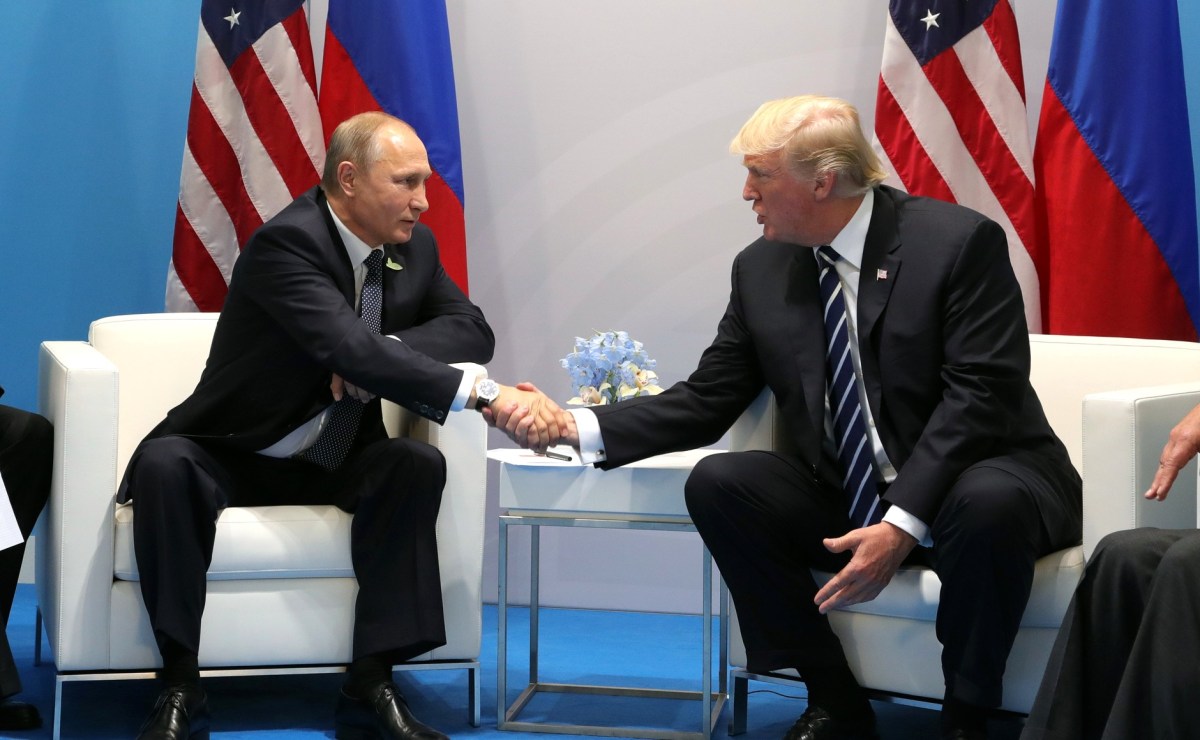
On July 16th, Trump meets with Putin and they hold a joint press conference in which Trump seems to accept Putin’s denial of Russian interference in the 2016 presidential election.  The next day, Trump says that he misspoke.

On July 27th, Trump denies a CNN report that he knew in advance of the Russian meeting between the Kremlin-linked lawyer and Trump Jr., Manafort, and Kushner.  Michael Coen, now cooperating with the Mueller probe is reported to be willing to testify otherwise.

On August 1st, Trump write a tweet calling on his Attorney General to end the Mueller probe.

On August 5th, Trump writes a tweet that the Trump Tower meeting in 2016 was to get information on an opponent.

On August 21st, Paul Manafort is convicted on 8 charges relating to tax and bank fraud.

On September 14th, it was reported that Manafort is now cooperating with Mueller’s investigation.

And since then, it’s seems like Mueller has adhered the the long-standing protocol for not making any major decisions or issuing any indictments leading up to a November election.  By all accounts, that ends tonight.  What happens next will have a profound impact on Americans and the direction of their country.

There’s been wide spread speculation of how Trump will proceed after the mid-term elections.  Some think that Jeff Sessions will be removed from the Attorney General role, allowing for someone with Trump’s best interests in mind to take the position.  Theoretically, this person may be able to end the Mueller investigation, or at least keep the report from reaching the public.  It’s also been speculated that Rod Rosenstein, the man currently overseeing the Mueller probe will be removed.  It’s assumed that he reason why Trump wouldn’t have made these moves prior to the election is because it would be perceived as politically unpopular.

When I look at this sequence of events, and the hundreds if not thousands of other details I’ve observed relating to bigger picture, I can calmly say that something here isn’t right.  There’s a significant amount of information that I’m not privy to which would prevent me from making any conclusions at this point, but that doesn’t prevent me from making an assessment based on what I know.

From what I’ve seen, Trump will likely be found guilty of conspiracy to defraud the United States relating to Russia’s influencing the 2016 presidential Campaign.  He’s also likely to be found guilty of obstruction of justice for a myriad of efforts relating to undermining the investigation into Russia’s involvement in the 2016 campaign.  I would also say it’s highly likely that he’s found guilty of peripheral crimes like campaign finance violations, tax fraud, bank fraud, and the like.

Here are some of the softer details which I’ve considered:

On June 9th, 2016, Trump’s son, son-in-law, and campaign manager met with a Kremlin-linked lawyer who had promised compromising information on Hillary Clinton.  On July 27th, Trump gave a news conference where he looked directly into the camera and said, “Russia, if you’re listening, I hope you’re able to find the 30,000 emails that are missing.”  He brushed it off as a joke or political rhetoric but I think there’s more to it than that.  I used to play a lot of poker and I learned to read people’s body language.  For most of that conference, his body language was standard Trump.  But during that request, things were very different.  Both hands are firmly gripping the podium instead of his classic hand gestures.  He’s addressing the camera instead of the audience of reporters in front of him.  During the request, he maintains eye contact with the camera for all but one moment.  And in that moment where he looks away, he’s projecting the body language of someone who is deeply conflicted about what he’s saying.  I think he knew it was a genuine request which he was going to try and pass off as political bluster.  I also think that there’s a very good chance that this request is a result of the now infamous Trump Tower meeting just a couple weeks prior.

I’m speculating at this point but if I were Putin and interested in supporting Trump over Hillary, I’d be inclined to provide Trump with as much ammunition as possible.  I would also want to do that in a manner which was effectively untraceable.  That means that I, nor any of my close associates would ever have direct contact with Trump.  Preferably, it would those not directly linked to me speaking with his inner circle.  And it would be imperative to avoid any physical or traceable hand-off.  But despite all this distance, I would still want some personal accountability.  Even if it was only a gesture, something from Trump which explicitly said, ‘I want your help’.  If nothing else, this would leave Trump deeply compromised and easily influenced.  What makes this exercise far less speculative is a detail contained in the indictment of 12 Russian intelligence operatives working to undermine the 2016 election.  Immediately after Trump made that request, Russia began to target Hillary’s emails.

If true, Putin wouldn’t need the alleged pee-tape as he would literally have evidence that Russia deliberately interfered in the election at Trump’s request.  And this would explain a lot.  While Trump has derided just about every political person he’s encountered.. except one.  Trump has shown nothing but respect to Putin and if nothing else, it’s out of character.  It was also very interesting to see their body language while at the Helsinki conference this summer.  For me, I saw someone who looked compromised.  I also found it amusing that when Putin was asked if he had any compromising information against Trump, he issued a classic non-denial denial.

The deeper you dive into the connection between Trump and Russia, the more likely this all seems.  After Trump’s Atlanta Casino’s went bankrupt and nobody else would lend to him, Trump looked like he had finally run out of luck.  But as admitted by his sons, they were miraculously able to get all the funding they needed out of Russia.  As Moscow banks have been repeatedly found guilty of large scale money laundering, I suspect there’s a connection here.  And I suspect this to be a primary reason for why Trump would not issue his tax returns.

The last soft detail that I’d like to lean on here is an old Shakespeare quote, “the lady doth protest too much, methinks.”  This quotes illuminates a rather consistent tell from a guilty conscience.  If Trump was innocent of ‘collusion’, he would be much less likely to tweet “NO COLLUSION!” on a daily basis.  He would also be much likely to embrace the narcissists prayer of there was no collusion.  And if there was, it wasn’t that bad.  And if it was, it’s not that big of a deal.  And if it is, it’s not my fault.  And if it was, I didn’t mean it.  And if I did, you deserved it.

But this all still lies beneath the surface of what’s publicly known.  I don’t think I’ve ever looked forward to something as much as I’ve looked forward to seeing Mueller’s report.  For me, Trump represents a great imbalance in the world.  The circumstances that allowed for someone as corrupted as Trump to find himself in the highest seat of power within our known universe shouldn’t exist.  And if they persist, the world will burn.

I drew an interesting analogy the other day.  Trump is to Mueller as Connor McGregor is to Khabib Nurmagomedov.  Both Connor and Trump rose to unprecedented levels of power through non-traditional means, and at the expense of the institutions which got them there.  Both strut around supremely confident in themselves while ignoring glaring errors in their approach to their craft.  Both fully subscribed to their own hype.  Last month, I didn’t just think Khabib would win, I wanted him to win for the sake of restoring balance.  The UFC has become more about prize fighting than about martial arts and I saw that as a detriment to the sport.  When Khabib did what he did (before the Eagle kick), I felt much better about the world.  Not only do I hope the same thing for Mueller’s investigation, I am as confident in Mueller as I was in Khabib.

And that leads us to tonight.. Remember Remember the 6th of November.  Tonight is perhaps one of the most consequential mid-term elections in our Country’s history.  Should the democrats take the House of Representatives, they’ll have the ability to subpoena Trump’s tax returns and begin a slew of investigations into his activities which weren’t possible under a Republican house.  If the democrats take the senate, the entire legislative branch of the government will be looking to hold Trump accountable for his actions.  Up until now, I would have a hard time describing the republicans as anything other than complicit in Trump’s behavior.  Under those conditions, I have a hard time seeing how Trump may last the term.

If the democrats are unable to take the house and or senate, Trump remains in control of three branches of government.  Under those conditions, I’m not sure what Trump will do… but I doubt it’ll be good for democracy or the common person.

If I were to estimate how this plays out…

Democrats win the house and republicans retain a 51/49 split in the senate.  Trump will fire Sessions and Rosenstein and replace them with those who are genuinely loyal to Trump.  Mueller releases multiple indictments in the following days or weeks, including Roger Stone, and Trump Jr.  Having hit the inner circle, Trump pulls every lever he has, looking to block the report, ultimately painting himself into a corner.  Once the report makes its way to the house, it will inevitably be leaked to the public.  The public will then have to decide whether or accept or reject the reality they see.  Most will accept it, some will still reject it as a deep state conspiracy.  The house will move to impeach, but with a Republican controlled congress, I’m still not confident in impeachment.  I think this makes its way to the supreme court.  Despite the supreme court being slightly more partisan than intended, I think they’ll appreciate what’s at stake and act in the interests of justice.  I think Trump spends most of 2019 and 2020 defending a laundry list of charges ranging from conspiracy, to money laundering, to tax evasion, to violating the emoluments clause.  During that time, consumer confidence will reverse course and we’ll enter a recession worse than 2008.  It’ll trigger a global recession that will hit countries like the US and China hardest.  Every institution from global finance to democracy will be questioned.  As it should.

And from those ashes, we will rise.


Power Vs. Efficiency

I’ve been trying to understand power.  What is it?  Why do people want it?  What does it help you accomplish?  Is it something I should pursue?

A younger me sought power for the sake of doing good.  Average me could do some good, powerful me could do lots of good.  Seemed like power was only a bad thing when in the hands of bad people.  I suspect that’s the understanding most people are under.  I’m not so sure.

Consider this…  If we accept this idea that only good people should be powerful, then we’ll actively look to empower those who we think are good while tearing down those who we think are bad.  Sounds like most of history right?  But who gets to decide who is good and who is bad?  It’s not always so obvious.  And what happens when the powerless become powerful?  Do we achieve balance? Or do we create another dominance hierarchy?

The first quote that ever stuck with me was, “Power corrupts.  Absolute power corrupts absolutely.”  So by empowering someone, what are we really doing?  If we look throughout history, the powerful have never been without corruption.  It didn’t matter at which point in history, or which culture, or which political ideology you followed, power corrupted all.  Yet when we see corruption among the powerful and call foul, our first instinct is to take the power from them.

That’s probably the beauty of democracy, the power of the people is distributed among the people.  At least that’s how it’s supposed to go.

So is everything just about power?  Being the oppressor or being the oppressed?  I doubt it.  There has to be another level to this.

What about me?  What would I do if I had power?  As someone who prioritizes integrity and the good of others, how would I be corrupted.  What if my intentions were to do the best I could for everyone I was responsible for.  What if my inner circle included everyone?  Why doesn’t that sound like power?

I have an idea.

What if power was the anti-thesis of efficiency?  Here’s a simple example:  You have someone within a company who gets to hire any person of their choosing for a position.  When that person hires their friend instead of the best candidate, it’s a demonstration of power.  When that person hires the best candidate, it’s a demonstration of efficiency.  It doesn’t matter how powerful a person is, as long as they’re making the best decision for everyone involved, it’s an exercise in efficiency.  It only becomes an exercise in power when those involved disagree with the decision being made.  Why would you need to impose your will when your decisions are best for everyone and are being welcomed by others?

This idea of only the good should be powerful… there’s another level to it.  The reason why we have such a hard time agreeing on who should be powerful is because we have such a hard time agreeing on who (or what) is good.  If we could come up with a decision which we universally recognized as good… it would be because it was what was most beneficial to those involved.  If that decision was to the immense benefit of everyone involved, I have a hard time perceiving that as power.  Taking everyone’s needs into consideration and deciding what was best for everyone involved seems like a remarkable if not impossible exercise in efficiency.

Perhaps we’ve established two ends of a spectrum.

Business Ideas: An Amazon Mailbox

So I ordered a bunch of stuff from Amazon this year and each time it arrived, same thing happened.  My phone rings in the early afternoon and it shows that someone is buzzing at my front door.  Since I’m not home and it doesn’t make much sense to buzz a stranger into my building, I don’t.  Then I get home and magically, there’s a package waiting for me at my front door, inside the building.  I’m not upset… almost a little impressed at their ability to get in.

My building is fairly low-key and everyone keeps to themselves.  I don’t think there’s a significant risk of people stealing my package as it sits in front of my door for a few hours but not everyone is so lucky.  There are countless videos of people stealing package from door steps, including delivery employees.  I’m not actually sure what the rules are around this but we clearly need to find another solution.  Enter the Amazon Mailbox.

The idea is that this box would be larger than your average mail box, so that it’s capable of receiving much larger packages.  I’m not entirely sure what the optimal size would be.  Perhaps a review of the average dimensions of packages shipped would shine some light on that.  There’s a good chance that we’d find a stat like 95% of packages are less than 2’x2’x2′.  If that’s the case, make it just a bit bigger and offer some XL options for those looking to receive larger packages.

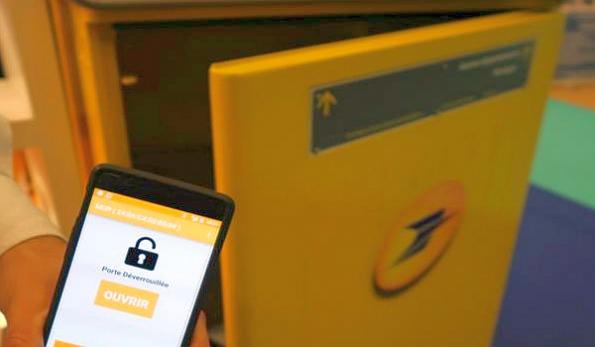
So a giant mailbox eh?  Well there should probably be more to it than that.  A big mailbox is just going to be a target for theft if there aren’t any security measures.  I’m thinking a solid lock that can be opened through an NFC panel.  That way a delivery driver can receive a one-time, time-locked code which will allow them to make the delivery.  Once the package is in and the door is closed, you’re back to being the only one with the ‘key’.  If someone somehow manages to get in with a code that they weren’t supposed to, good chance it’ll contain all the metadata necessary to know who it was.

Good enough?  Not quite.  In this age, you probably need a security camera.  Perhaps one built into the actual mailbox with a birds eye lens that gives you full view of your doorway.  If it was motion activated, you could have a recording of every delivery as well as anyone else who was creeping around your front door.  In the mobile age, it would be also be nice to have a notification arrive to your phone when your mailbox has been opened so you can quickly check the footage and make sure everything was straight forward.

So where do these things go?  If you own a home, there’s probably enough real estate at the front of your house to make this work without too many issues.    Maybe it gets bolted to the floor or door.  The problem is that E-comm seems to be most heavily used in areas of high urban density.  The idea of retroactively installing these things in old apartment or condo buildings seems like an uphill battle.  I think there’s good reason to make this a standard in new buildings, but you would probably need some traction first.  Hmm…

I’m genuinely not sure if something like this would work but I’ll put it out there.  What if you created your own PO box?  Rent a space and load it up with as many of these Amazon mailboxes as logistically possible and charge something like $10/mo for a rental fee.  You might even get away with having the place fully automated.  An NFC panel on the front door could let you in while keeping uninvited visitors out.  Load the place up with security cameras and have them tethered into a central security monitoring system with clear instructions around showing up and sorting out the rift-raft when it happens.  If you have any issues, just use your app to start a customer service chat.

I can’t help but want to run the numbers for a sec… Lets say a 1000 sqft location and assume these Amazon mailboxes are 2’x2’x2′.  Without any room to walk, you could place 500 of these on the floor.  Stacked up 6′ high, that’s 1500 mailboxes.  Accommodating for walkways, let’s cut that in half and say 750 mailboxes total.  750 @ $10/month would be $7500/month in income.  Lower than I would’ve liked.  Maybe there’s a way to increase the density here.  Maybe there’s a formula that would leave us with an ideal square footage for a location.  Either way, the overhead would be extremely low if you could avoid having to staff it.  Electric, IT, security… and general corporate overhead.  I found an average rate of $23/sqft for retail.  Applying that here, we’re looking at about $2300/month in rent.  If you could keep monthly overhead for each location under $2500, you have a pretty healthy margin.  That said, 750 mailboxes @ $10/month still only amounts to $90,000 in annual revenue.  Hardly worth the effort for most.  Even with multiple locations, you’d need 12 just to break $1,000,000 in revenue.

But maybe it’s not about modern PO boxes.  Maybe that’s the penetration strategy for being able to manufacture and sell these boxes.  If you could get people using them and excited about their convenience, it’s only a matter of time until people start requesting them in their homes.  If you could get some major property development companies on board, you could have these installed in every new condo tower they build.  If the average building has (guessing) 40 units and these boxes come at a cost of $250 each, that’s a $10,000 for every new building that goes up.  If you get to the point where most new builds include a ecomm-ready mailbox, that would likely build enough traction for these things to go mainstream.  If they go mainstream, e-comm becomes that much more effective (and attractive).  If e-comm gets that much more effective and attractive, that many more people will want to buy these boxes.

All speculative, of course… just an exercise in problem solving 🙂


Our Most Sensible Division

I do a lot of thinking in the car.  It’s almost like a shower for me.. very meditative.  Yesterday, I literally pulled over to make a note of this thought.

The western world is clearly divided right now.  Democrats vs. Republicans.  Liberals vs. Conservatives.  Blue vs. Red.  Left vs. Right.  Sometimes it seems downright silly… like division for the sake of division.  I can confidently say that I don’t identify with either side.  One champions a compassionate approach but fails to act intelligently.  One champions an intelligent approach but fails to act compassionately.  Neither seems very interested in accountability or honest conversation.  And neither seems to realize that for one side to win, both must win.

With tribalism continuing to be one of my biggest personal frustrations, I’m motivated to understand it.  When I think about why people choose to be divided, the reasons usually aren’t that hard to find.  More often than not, it seems to be driven by fear.  And that fear tends to be driven by scarcity in some way.  Perhaps a scarcity of resources, opportunity, or safety.  In a position of abundance and security, we are much more likely to extend a helping hand to a stranger.  In a position of scarcity and fear, we only take care of those close to us.  As scarcity and fear increase, that circle gets smaller.

This would suggest that in times of peace and abundance, things like Left vs. Right don’t exist.  Yet the liberal and conservative mindset have existed since well before modern politics.  While the politicians certainly have a hand in playing up that narrative, today, perhaps there’s something else worth exploring here.

Humanity seems to be defined by some mode of evolutionary progress.  If you look at what separates our species from other intelligent animals, it’s the rate at which we’ve progressed.  Genetically, we’re almost identical to chimpanzees but in a more practical sense, we couldn’t be more different.  Comparing humans to all other known life, we seem to have stumbled onto the secret sauce of forward progress.  Yet we have such a hard time agreeing on which direction is forward and what should be considered progress.  Maybe, whatever this secret sauce is, it exists primarily is the collective subconscious.

If I were to guess at what that secret sauce might be, I would say it’s how we’ve evolved to instinctually understand the status quo.  Quite simply, there are those who would prefer to maintain it and those who would prefer to challenge it.  Generally speaking, you’re more interested in maintaining the status quo when you’re happy with your situation and challenging the status quo when you’re unhappy with your situation.  Sounds rather sensible doesn’t it?

I had a Eureka moment yesterday: You can’t challenge a status quo which doesn’t exist.  I’m big on challenging the status quo and I’m no stranger to the frustrations of those who look to maintain it in the face of progress.  Yet I was never dismissive of their value to the bigger picture and I think I now understand why.  The status quo seems to provide the foundation on which forward progress is most likely.  If everyone looked to challenge the status quo, what would they challenge?  Sounds like chaos.  Ironically, maintaining the status quo seems like an exercise in order.  Perhaps forward progress is a fine balance between chaos and order.

When I step back and think about how this perspective applies to modern society, a lot starts to make sense.  The right tends to be defined by their conservative approach – aka maintaining the status quo.  The left tends to be defined by their liberal approach – aka challenging the status quo.  Many of history’s great cultural and political clashes can be distilled down to those who wanted change and those who wanted to keep things the same.  And yet both were and probably are necessary.

One dynamic which ties in here is the dichotomy of intelligence vs. compassion.  I’ve found that the left behaves significantly more compassionately than the right while the right behaves significantly more intelligent than the left.  It has crossed my mind that those who lean more towards intelligence are more likely to find success in their lives, especially in their careers.  This would lead towards greater financial prosperity and a higher quality of life.  If you’re aware that you’re enjoying a higher quality of life than the average, would you not be motivated to maintain the status quo?  Would you not be more motivated to support those around you who have used intelligence as a path to success?  Would you not begin to assume that a path of intelligence is more rewarding than a path of compassion?  But what if you leaned more towards compassion?  What if you were sensitive to the injustices in the world and were motivated to pursue equality and social justice more than income?  And what if you were willing to accept financial disparity for the sake of helping others?  And what if you’re aware that you’re enjoying a lower quality of life than average because of that sacrifice, would you not be motivated to challenge the status quo?

The political division of our species sucks.  It often leads me to think that the best solution is no division at all and that we’re destined to arrive at some variation of a cybernetic hive mind.  Perhaps that’s still the case, but maybe not.  There seem to be some evolutionary divisions which have proven rather practical.  Males and females might be the most classic example.. having evolved a remarkably well balanced partnership over the course of evolution (albeit a little bumpy at the moment).  When it comes to the progress we’ve made over the last 10,000 years though, I might just attribute that to the balanced partnership between those who look to challenge the status quo and those who look to maintain it.

If we could learn to see one another as partners in forward progress instead of obstacles between us and power.. I can’t help but think everything would run a little more smoothly.


It’s Not a Disability, It’s a Genetic Variance

Over the last few years, I started realizing how much trouble we were having communicating with one another.  Less so for close friends and family.  Much more so when it comes to discussing ideologies with strangers.  Having failed at so many of these conversations, I may have learned something.  If we want to have more meaningful conversations, we need to do a better job of being honest with one another.  And that includes using the most accurate language available to us.

I hear the word disability tossed around a fair bit.  There now seems to be a disability for everything.  It’s like if you’re anything other than the ‘perfect’ human blueprint, you are somehow lesser.  And this is your disability.

Fuck that.

I read something interesting a few months ago about the victim mentality.  Someone was asked why it had gained in popularity and what made it attractive.  The answer was rather simple:  it was an easy way to be powerful.  The traditional route to power was through hard work and success, and it usually took  years.  In a society that celebrates and protects victims, why invest the time and effort into building yourself up through accountability and responsibility when you could get the same result through claiming your victimhood?  Why put in the long hours and make the hard decisions when you could look for ways in which you’ve been marginalized and call foul?

Disabled?  Why even try?  Why would you want to overcome your challenges?  Why would you want to try and find your gift?  Why not tell the world that you got a raw deal and that it’s their responsibility to make it up to you?

Because of Stephen Hawking and everyone like him.

Put him in a pro football game and I’ll show you someone who is appears severely disabled.  Place him within an academic environment where he can research, study, and share his knowledge… I’ll show you one of the most gifted individuals of the last century.  It’s only a disability when you apply yourself to the wrong task.  That means it’s not a disability, it’s a misalignment.  Your genetic variance needs to be aligned with the right task for you to do what you do best.  I would imagine Gronk would be about as successful at teaching theoretical physics to a group of PhDs as Hawking would be at catching an end-zone pass.

I think it’s about time we start making an effort to understand the situation for what it is.  There are plenty of illnesses which are real.  There are all kinds of foreign substances which can be introduced to your body which will mess your shit up.  That’s where it’s important to understand how to heal the body and bring it back to a sustainable equilibrium.  But I can’t help but think that this is very different from most if not all physical or cognitive ‘disabilities’.  Those aren’t disabilities, those are genetic variances.

When I try to think about myself from the perspective of disability, I can see plenty that’s wrong with me.  I get pretty bad pollen allergies every year.  My vision isn’t perfect.  I qualify as dyslexic.  I have a series of lingering sports injuries including chronic lower back pain and metal in my arm.  I have a heavily deviated septum.  My sense of smell sucks.  I binge eat.  And etc. And etc. And etc.  And it’s not like I’m unaware of them.  I’m working on improving the ones I can, and not stressed about the rest.

It’s funny, I’m thinking back to when I grew up and it the was kind of neighborhood where nobody was short on disadvantages.  Everyone was aware of what was making their lives hard.  We didn’t complain or expect someone else to change it though, we just assumed the deck was stacked against us.  What we would do was use that a measure of whose success was worth celebrating.  It wasn’t about who had the greatest accomplishment, it was about who did the most with the least.  I can’t help but be grateful that I was raised with that perspective.

When I think about who I am and what I’ve been given, with the perspective I have today… I see something pretty cool.  All things considered, I think I got a pretty good roll of the genetic dice.  But like anyone else, it’s a mixed bag.  The way my brain is wired allows me to do certain thing exceptionally well while it struggles with others.  Dyslexic?  Why?  Because my brain is wired to do things differently than someone else’s?  And what if I can do these things better than the average person?  Is it a disability?  Who’s to say that my unique genetic variance doesn’t simultaneously display symptoms of dyslexia while allowing my mind to do all kinds of other cool things that others struggle with

We are all our own deviation from the human blueprint.  Each variation of that blueprint comes with its own advantages and disadvantages.  And those advantages and disadvantages wills shift depending on circumstance.  The best thing we can do for ourselves is understand where we have the potential to be exceptional at and apply ourselves to the best of our abilities.   The best thing we can do as a society is to support the discovery of what makes us different, and then to support the pursuit of being our absolute best at it.  Through this, I can see a happier, more productive world.

Whatever it is that you are, there is something you do better than anyone else. If you spend your time doing that, you are not disabled, you are gifted.

Intelligence Vs. Compassion

I’ve done a lot of thinking on these two ideas over the last year or so.  The western world seems rather divided right now.. democrats vs. republicans.. liberals vs. conservatives.. blue vs. red.. left vs. right.  When you consider how much these individuals agree on, the division seems rather silly.  Yet it persists.  I have no doubt that the existing political system and those within it perpetuate this division for their own gain, but there’s something more to it than that.  They didn’t create that division, they’re just the ones exploiting it.  There’s something that exists beneath that.. something biological.

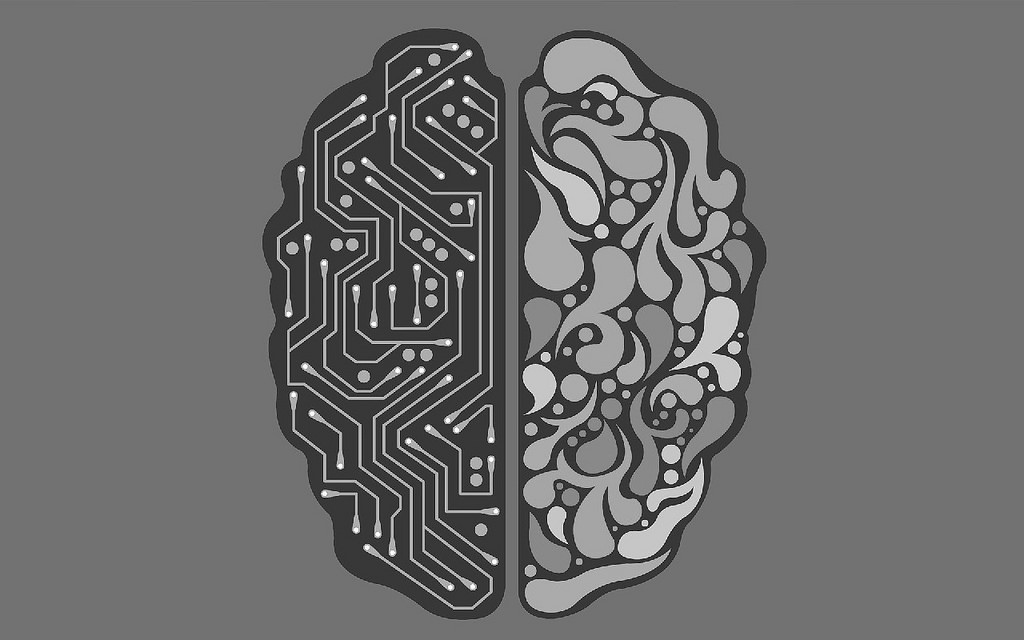
I wrote an entry a while back on thought vs. emotion.  Introspectively, I could tell that they were two different cognitive processes within my brain.  It led me to suspect that they had different roles within the human experience.  I understood that you couldn’t use emotion to do things like solve math problems or learn languages.  I also understood that happiness wasn’t a logical thought.  Seemed rather likely that the thoughtful part of the brain would pursue happiness while the emotional part of the brain allowed you to enjoy it.

Ironically, a few months later, a friend gave me a book for my birthday that discussed this topic.  The book, A General Thoery of Love, was written by a small team of MDs and PhDs in clinical psychology.  To my surprise, the authors were big fans of poetry, love, their families, and all the other soft stuff you might not associate with a scientific mind.  I must say it was done quite well and taught me a great deal about how the mind works.

One of my biggest takeaways was how obvious evolution was in determining the fundamental structure of the human brain.  The base of our brain is referred to as the reptilian brain and  controls things like your vitals and balance.  This also represents our most base instincts.. things relating to survival like the 4 Fs: feeding, fighting, fleeing, and… reproduction.  What the reptile brain seems to lack though is any sense of compassion.  I was rather surprised to find out that reptiles are known to eat their young.  Apparently the part of the brain that tells us to be kind to our kin didn’t come until afterwards.

After the reptile brain came the limbic brain.  It’s likely that this evolution occurred during the early evolution of mammals.  The theory is that when life made the jump from laying eggs to carrying their young, the brain needed to adapt appropriately.  Mammals were taking a different approach to survival, one which required them to care for their young until they were capable of fending for themselves.  They needed a way to communicate.  They needed to develop a language.  Enter the limbic brain, the emotional center of the human brain today.  The limbic brain was one of facial expressions, touch, sound, and all these other little nuances that allowed mammals to instinctively understand how one another felt.  Not a language in the classic sense, but very much a language nonetheless.

The most recent evolution of the brain is the neocortex.  It would be convenient to say that that the neocortex is unique to humans but it isn’t.  It’s present in great apes, dolphins, elephants, and most other mammals.  What seems to makes humans different is how much of brain’s mass is dedicated to the neocortex and the size of our brain relative to the size of our bodies.  As one might guess, this is the part of the brain is responsible for what we typically consider to be human intelligence: logic, abstract thought, imagination, and consciousness.

Effectively, through millions upon millions of years of evolution, our brain has equipped itself for survival, compassion, and intelligence.  In that order.  And yet the vast majority of the human brain is dedicated to its most recent addition: intelligence.  That evolution has happened rather quickly considering how long it took for the other parts of the brain to develop.  Nature rarely does anything by mistake.

I’m grateful for having learned all this because it’s given me a rather useful insight into the difference between thought and emotion.  It’s also shown me how little the general public seems to understand or appreciate how the brain works.  How often will someone talk about how they feel towards something when they’re actually thinking about it?  How often will someone claim to be using their feelings to navigate something abstract?  How often are we asked how we feel when we should be asked what we think?  I suspect there’s something worth observing here.

As someone who prioritizes thoughtfulness, logic, and truth, I’m probably more easily frustrated by this dynamic than others.  As a result, I’ve been thinking about it a fair bit and have noticed something worth sharing.  Throughout the course of recorded history, I’ve noticed a shift from emotional to intelligent.  I’m unsure if it’s a result of an ongoing biological evolution in the brain, or a gradual appreciation for what intelligence allows us to do.  Realistically, it’s probably both.  If I were to guess, natural selection favors intelligence.

Religion might be the easiest example here.  Religion has existed in some shape or form for about as long as human civilization.  Our brains are programmed to identify patterns, and once we do, we can’t help but use our imaginations to assign meaning to them.  As soon as we were able to recognize the significance of things like the sun and stars, we couldn’t help but try to tie them into one grand narrative.  Perhaps this is one of the reasons why religion is such a complex topic.. perhaps in some way, it serves as a chronology of intelligence vs. compassion.

There was a point where religion was about community and worship.. this general idea that if you were kind and compassionate to each other, your god would be kind and compassionate to you.  Over time, intelligence allowed us to realize that if we were kind and compassionate to each other, that was probably all we needed.  In that time, god went from an individual who was supposed to be loved or feared, to something much more abstract.  Since then, religion has become less about worship and more about philosophical teachings relating to morality.  Unfortunately for these religions, they often attributed their teachings to the word of god rather than what they most likely were: a reflection of how humanity understood morality at that point in history.  As a result, we were put in a position where humanity’s collective understanding of morality was evolving and god’s wasn’t.  How could that be.  Something wasn’t right.

As the centuries went by, the intellectual crowd kept coming up with better and better reasons to stray from religion.  The politics, the corruption, the lack of evidence, the logical fallacies, the tribalism… it just looked like a big pile of nope.  Even the renaiisance experienced a big shift from religion to the sciences.  And now, in the 21st century, religion looks to be as irrelevant as ever.  The world’s brightest minds are notoriously non-religious.  The vast majority of people STEM careers are non-religious.  The vast majority of business and industry leaders are non-religious.  The vast majority of recognized philosophers are non-religious.  The only leaders that I can think of who tend to be religious are political leaders.  As their actions tend to show, it’s a function of votes and job security more than loyalty to the cause.

The better we get at using the intelligent part of our brain, the better we get at discerning the difference between real and not real.  As we get better at discerning between real and not real, truth and reality become increasingly important to us.  As truth and reality become increasing important to us, the fictions of religion becomes much less attractive.  While I think this movement away from religion is justified if not an essential part of our evolution, we should be mindful not to throw away the baby with the bath water.  Religion was among the first establishments to champion the ideas of kindness, community, and morality.  Those ideas are worth bringing with us to where ever we go next.

When I think about where we are now and where we go next, I can’t help but think that computers are rather central to the conversation.  When I think about how computers were designed from the beginning, I can’t help but think that they were designed as an extension of our neocortex.  Computers are logical by nature.  If a program has a line of code which contains a logical fallacy, it creates an error.  And while our computers inch towards levels of artificial intelligence that rival our own, there’s an obvious absence of emotion or survival instincts.  This idea that one of humanity’s most significant creations is an extension of one of our most significant evolutionary advantages…. doesn’t strike me as a coincidence.

I’ve been thinking about writing a book for a couple year now.  It’s working title is the Vulcan Republic.  The idea is a mash-up between Plato’s Republic and the Vulcan philosophies from Star Trek.  One takes place in the past, using logic in search of how one would create a Utopian society.  The other takes place in the future where a species just like humanity embraced logic and created that utopia.  Considering the path that we’ve taken over the course of our evolution, is this so unlikely?  Is it so far fetched that intelligence is our guiding star?

MBTI helped me understand how strong the division is between thinkers and feelers.  I know this all too well as the feelers tend to get upset with me for thinking too much and feeling too little.  But then I ask them why I should feel more and think less, and they don’t have a reason.  They just feel that way.  As it turns out, the part of the brain that knows why things happen is the thinking part.  And unfortunately for me, there are statistically more feelers than thinkers.  But I suspect this is changing.  I suspect that every generation, on average, has been more thoughtful than their parents’ generation.  I expect that computers will help kids to learn and embrace logic faster that previous generations.  I expect that the kids growing up today will respond to the highly emotional conversations around current events by learning to be more thoughtful and sensible in the way they discuss ideas with one another.

That’s a future that excites me.  But it doesn’t excite everyone.  The more emotional crowd aren’t always the biggest fan of computers, logic, or intelligence.  I’m often faced with situations where they consider these things to be threatening.  They’ll use words like empty, cold, or robotic.  They seem to assume that intelligence and compassion are binary, that it’s one or the other.  To that point, I think they’re wrong.  I think that we could all be reminded of a simple truth: The most intelligent decision someone can make is a compassionate decision, and the most compassionate decision someone can make is an intelligent decision.

Intelligence and compassion tend to operate like a map and compass.  Intelligence is a tool that helps you read the terrain and understand the most effective way to move from point A to point B.  Compassion is like a compass which might not tell you much about where you are or how to get to where you want to go, but it’ll always give you a sense of direction.  Too often, people will lead with unintelligent compassion, resulting in good intentions but progress in the wrong direction.  Watching the social justice warriors embolden the conservative crowd reminded me of this.  But at the same time, there are those who lead with intelligence and a lack of compassion which lead to productive actions which are counter-productive to humanity’s collective goals.  You don’t have to look much further than Thanos or any bond villain to see how that plays out.  I suspect that for real progress, we need to embrace both, and understand that when we are at our best, they are one and the same.

Nature rarely does anything by mistake… Survive.  Be compassionate.  Be intelligent.


Truth & Reality, and why it matters (Part 3)

This marks my third attempt at trying to tackle a subject that I started over a month ago.  Part of me feels like it was a failure that I couldn’t do this in one try.  Another part of me feels a bit foolish for thinking I could create any semblance of a summary on the topic (regardless of attempts).  And yet another part of me appreciates that I took a crack at it and for having learned a few things along the way.

For over a month now, I’ve been asking myself why truth and reality matter.  I’ve been reading other peoples’ interpretations of the matter.  I’ve watched TED talks on it.  I’ve talked to friends about it.  And I’ve even revisited uncomfortable conversations where this was the theme.  I keep coming back to the same thing:

If truth and reality don’t matter, what does?

That’s the answer that popped immediately into my head the first time I asked it.  I thought it was a novel response, but also a bit of a cop out.  Answering a question with a question is always a bit cheeky and I was looking for something a bit more concrete anyways.  But I kept coming back to that.  Finally, I thought to explore that direction a bit further.  And as is usually the case, while in the shower, I made progress.

It comes down to this frustration of mine.  When people feel that we’re all entitled to our own truth and our own reality… that we don’t all share a truth and a reality… I lose the ability to connect with them.  The example that comes to mind first is talking to religious fundamentalists about the age of the earth.  The scientific consensus is 4.5 billion years old while various religious texts suggest only a few thousand years old.  If you were to approach one of these individuals and suggest that the earth might be much older than they believe, they might tell you that everyone is entitled to their own beliefs.  If you were to provide them with evidence which challenged their belief, they might respond by saying that god put that there to test their faith.  If you were to provide them with logic which challenged their belief, they might respond by saying god put you there to challenge their faith.  No matter what you might do or say, it only confirms their narrative.  Rather than continuing to try and understand the reality which we all live in, that person has committed to their tribe’s interpretation… one in which I struggle to find common ground.

I suspect this theme is well understood by those who work at mental health institutions with more extreme disorders.  When someone shares a reality with you, there’s an alignment.  With an alignment, things like communication, empathy, intuition, and chemistry are possible;  and can even become effortless.  When that alignment is absent.. I’m picturing a therapist trying to communicate with someone who has severe dementia.  They exist in two different worlds.  Both have a genuine belief that their world is real, but the two exist in vastly different interpretations of the same reality.

Without a shared reality, we lose the ability to connect with one another.  If we were chess pieces, reality would be our chess board.  If you’ve decided that you’re a checker, we’ve likely lost the ability to interact in a meaningful way.  And if too many people start to think they’re playing checkers, we lose the ability to play chess.  Chaos.

But how do we know we’re chess pieces and not checkers?  Isn’t it important to explore alternative explanations?  Is that not a primary purpose of freedom?

The hard truth is that we’ll probably never know for certain whether we’re playing chess or checkers.  The way in which our minds sense, interpret, and then hallucinate our realities, there always exists the potential that this is all a grand dream (or a simulation being run by advanced aliens).  And the hard truth we must accept is that this possibility will always exist and we must understand it to move forward.  Yes it’s a possibility, but one which has only ever existed in theory.  Everything we’ve ever observed would suggest that our reality is real.  Technically it is still an assumption, but it’s the assumption that all other assumptions are built on.  If we can’t agree on this, nothing else that we might agree on would have any basis in reality (because we couldn’t first agree on reality).

I often look at the universe through the lens of building blocks.  Matter has building blocks.  Math and physics have building blocks.  Even logic has building blocks.  When I’m thinking about connecting with old friends, things are seamless.  The building blocks of trust and familiarity are already there.  If I presented a new idea, it would be received fairly.  If the information was good and the logic was sound, my friends would look at that as an opportunity to learn and expand their understanding of the universe.  If it was bad information and faulty logic, they would make fun of me relentlessly.  Either way, this requires us to understand that we all live in our own interpretation of a shared reality.  What truly exists in my reality also exists in theirs and vice versa.  None of our interpretations are entirely accurate or complete, but some interpretations are more accurate and more complete than others.

If I were to try and have a conversation with strangers in which I was challenging their beliefs, one would hope that we would still agree on the basics.  Basics like the laws of physics, the value of logic, and that we all exist within a shared reality.  I would go so far as to say that if we all had a deep understanding of each, we’d be far more constructive in resolving conflicts and learning about the world around us.  Unfortunately, that’s not often the case.  Instead, I’ve found that people prefer to maintain their beliefs, even in the face of overwhelming evidence or reason.  And that’s where you start migrating away from the reality which we all exist in and start to build walls around the interpretation of reality you’ve created for yourself.  While potentially harmless at times, I can’t help but think that this, as a way of life, is deeply counter-productive to humanity’s goals.


I think I’ve made a case for why reality matters, but truth isn’t necessarily the same thing.  I’ve been grappling with the difference between a true statement and a universal truth.  Coming up with definitions we can all agree on is important to conversations like these.. otherwise we’re using the same words but talking about different things.  It’s important to have that common ground.  While there are nuanced differences between a universal truth and a true statement, I think that from the right perspective, they’re both the same.

A true statement would be something to the effect of looking down at your shoes, seeing red shoes, and then saying that you are wearing red shoes.  But what if your shoes weren’t red?  What if you had a genetic variance that caused you to see your green shoes as red?  You would see red, meaning that it was a true statement.  But if everyone else saw green, are the shoes not green?  I think this is the nuance between a true statement and a universal truth.  A true statement is an honest recollection of your interpretation of our shared reality while a universal truth is something which is true for everyone, whether or not they realize it.  And I can’t help but think that they are still the same thing.  Something to the effect of when someone makes an inaccurate ‘true statement’, it’s an act which occurs in reality.  If something occurs in reality, that action is true to everyone; ergo, the statement is false but the action is true.

And perhaps therein lies the monumentally confusing feat we’ve been struggling with.  With all of our genetic and cognitive differences, we’re bound to interpret our shared reality differently from one another.  It’s like we’re photographers, all taking pictures of the same scene.  While only one scene exists, we’ll produce a variety of pictures.  Some will be a difference of perspective, some will be a difference of equipment, some will be a difference of technique, and some will come up with their own wacky shit.  That’s not just OK, that should be encouraged.  But we must remind ourselves that our pictures are not the scene.  Our pictures are glimpses of the scene, just as the worlds which our minds project are only glimpses of the world we all live in.

Logic is how we find truth.  Truth is how we find reality.  And perhaps finding reality is a good start to understanding our place within it.