Incest Porn

In my prime, I was probably just as interested in porn and masturbation as any other stereotypical male.  Perhaps one of my most embarrassing memories was being walked in on by a friend back in grade 11.  I still maintain he didn’t see anything, but holy shit was that awkward… then embarrassing when the rest of the school found out… and then a highly entertaining memory.

As the years have passed, it’s become more of a functional effort for me.  Sometimes it’s to help me get to sleep, sometimes it’s to de-stress, sometimes it’s because I saw boobies on TV and wasn’t sure what else to do with myself.  I’ve always enjoyed watching porn for a very different reason though – as a reflection of the human psyche.

If you were to ask 100,000 people what their sexual preferences or fantasies were, I don’t think you’d get an honest set of data.  I think most people would respond with some variation of vanilla + light bdsm.  If you were to take a look at the major porn sites right now, they’re dominated by incest porn.  Thanks Glasses Morty…

There’s an honesty to porn.  In the privacy of your own home (and incognito mode), you tend to care less about what people think and more about getting you to that mind-blowing orgasm.  For me, I’ve been through several phases but it’s always revolved around female pleasure.  Something about a girl looking like she’s experiencing levels of pleasure she’s never experienced before is totally my jam.  And when I think about who I am as a person, I see an alignment there.  One of my favorite states of mind is when I introduce someone to something they’ve never experienced before, and they have an awesome time.  I’m also super competitive and want to be the best at everything, including her body, haha.  So what does it say about the current state of the human condition when porn is being dominated by an incest fetish?

If I were to go onto any major free porn site, I’m saying close to half of the videos listed are either mother-son, brother-sister, or daddy-daughter.  Some aren’t even incest related, but they’ll toss it in the title for more clicks.  As someone who has a younger sister who lives in LA that has flirted with the idea of being a stripper, the last thing I want when watching porn is a reminder that the girl in the video could be my little sister.  As someone who has a complicated relationship with his mother, hearing ‘do you like that, son?’ is a quick way for me to lose all interest in what I’m doing.  The daddy-daughter stuff?  I’m not a fan of unbalanced power dynamics.

When I wanna watch porn, I now literally have to skip through the first 5-10 minutes of story line or risk it being ruined for me.  Kinda.  Because every once in a while, there’s one that I’m into.  In trying to understand what I was enjoying about it, a few things came to mind.

First and foremost, it was a step-sibling dynamic.  No incest, just pretend incest.  Second, there was no jacked up power dynamic where the brother was blackmailing his sister or something weird like that.  The stuff that I was into was when there were two good looking people, living under the same roof, not related, super attracted to one another, knowing that it’s taboo, and caving into their desires.  Hmm… that’s kinda hot isn’t it?

And when I think about the popularity of this genre and what it tells us about the people who are watching it, I see a few interesting elements.

First is the evolution of the blended family.  Blended families are becoming the norm which means step-siblings are more common than ever.  That means we’re putting a whole bunch of teenagers and young adults, who aren’t related to each other, under the same roof.  From time to time, at least one of them is going to be attractive.  And we’re expecting the other sibling not to be attracted?  But their parents have told them that they’re brother and sister and brothers and sisters don’t have those kinds of feelings or engage in those behaviors.  That’s like preaching abstinence to reduce pregnancies.

Next is the taboo element.  Remember when BDSM was taboo?  Anal?  Gay sex?  Even blow jobs were taboo at one point.  They all follow the same pattern of a bunch of people collectively deciding it’s wrong and trying to shame the rest of us into complying.  But then a few people explore those boundaries, find out it’s totally awesome, and the dynamic starts to shift.  Eventually the people who tried to impose limitations on sexual freedoms start to look silly.  In some cases, you feel sorry for them.  In others, you swear they’re doing all kinds of kinky shit when nobody’s looking.

Finally, and perhaps the most subtle.  Or maybe just something I see… is this dynamic of doing what you know makes sense even when others tell you that you’re wrong, or a bad person for doing it.  If you were gay, at a time where the world was telling you that you shouldn’t be gay, I would imagine that being with the person you wanted to be with was an incredibly liberating and joyful experience.  This dynamic of going against the grain when you know you’re right is something that exists well beyond sex.  It’s how great investors invest.  It’s how great love stories are told.  It’s how great leaders change the world.  It’s also why teenagers consistently push the boundaries which their parents impose on them.  Whether it’s staying out late, skipping class, studying less than you should… most kids aren’t doing these things because they’re trying to sabotage their future, it’s because they think that they’re more capable than the limitations being place on them.  In the case of incest porn, I think it just comes down to…. she’s hot, I think she’s into me, we’re not related as much as dad and his new wife would like me to think so – and there’s your fantasy.

The last piece I’ll mention is that if any of what I’ve written here has relevancy, the real story is appreciating the diversity of porn because it’s indicative of the diversity of sexual desire, which is indicative of the diversity of humanity.  Some people are into big, some people are into small, some people are into feet, some people are into dressing like stuffed animals.  If we could understand and accept that 99.9% of the time, sex is about pleasure and not procreation, we’re in a position to realize a sexual revolution.  As long as there’s consent, do what feels good.  The doors that will open, the marriages that will saved, the minds that will be blown… could be very exciting times ahead.

I had the most fucked up dream

I don’t dream much.  I’m pretty sure it’s the cannabis.  When I get stoned before bed, it helps me pass out but I’m doubtful it helps me enter REM sleep.  I took a break from cannabis a few weeks ago, lost a bunch of weight, got a ton done, and thought I’d enjoy a nice Saturday night on the couch with my vape pen.  It was nice.  Until Elon Musk touched my bum.

The part of the dream that I remember was me and Elon Musk laying in a large bed, talking about all the cool stuff I’d want to talk to him about.  Then without warning, he touched my bum.  I’m not talking about light rub, I’m talking right on the button.  I immediately clued into what was happening and let out a stern and loud Noooooooo.  I turned around and he had a look of shock and shame like he just realized it was an unwanted advance.  He jumped behind his side of the bed to cover his embarrassment.  I remember feeling confused, and then sorry for the guy, and I think we talked it out… but that part is still fuzzy.  WTF.

Wow, there’s a lot to unpack there.

I guess first things first, why was I in bed with Elon Musk?  It’s fair to say that I have a bit of a professional crush on Elon.  I think he’s one of the most visionary leaders of our time and I greatly admire his approach to business.  He’s the effective bar I’ve set for myself so I pay close attention to what he does and how he does it.  That still doesn’t explain why we were in a bed together, but it was genuinely a non-sexual scenario for me.  I’ve also already gone down the ‘am I gay?’ rabbit hole and came back pretty sure that I was more likely to be asexual than gay.  Who knows, maybe we were in bed because I was actually in a bed.  Maybe Elon is the one guy I would sleep with?  Anyways, moving on…

The second part was the ‘bad touch’.  I’ve been hit on by guys before and I’ve always been pretty good with keeping things light, polite, and clear.  I didn’t have the opportunity in this one.  It went from a casual conversation with my back turned to him, to feeling like someone was about to go knuckle-deep and try to check my oil.  In fall fairness, I’ve reacted the same way when girls tried to do the same thing.

I think this is a result of all the time I’ve spent thinking about rape, sexual harassment, and sexual misconduct over the last few months.  I’ve been through some unwanted sexual scenarios but this dynamic was very different.  It was extremely unexpected, acute, and from someone who I didn’t want to turn around and toss out of my life.  If I remember the dream correctly, I think we talked it out afterwards and everything was good.

I think my subconscious was trying to simulate sexual harassment as experienced by these women who have accused these high-profile men.  Clearly it’s not an apples to apples comparison, but I can’t help but think I tapped into a few things.

The first is that there needs to be a difference between an unwanted advance and sexual harassment or sexual misconduct.  Elon clearly skipped a base or two with what he did and he obviously caught me by surprise, but once I said no, he stopped.  I was no worse for wear.  We talked it out, and we were good (I think?).

Perhaps this is where I should enter the disclaimer of rape is wrong, but the reality is that I see rape as a form of bullying (perhaps the most extreme) – and I am strongly against bullying of any form.  What I’m trying to understand here are the nuances because being held down and penetrated against your will is not the same as your idol trying to give you a sneak-attack prostate exam.

We seem to have entered into a time where this entire topic is taboo.  I keep hearing that we must believe the women who have accused these men of sexual misconduct but that’s literally contrary to one of the most fundamental legal principles – due process.  By no means am I saying that these accusations should be dismissed, but believing someone at face value for anything is a dangerous precedent to set.  I wholeheartedly agree that men everywhere need to step their game up, especially with holding their friends accountable, but this isn’t the way.

I’m confident that no one would step in more quickly or more fiercely than I would if I saw someone being taken advantage of like that.  It wouldn’t matter if it was rape, someone getting jumped, or a kid getting picked on (maybe less fiercely).  It’s all bullying to me.  It’s an exercise in the abuse of power.  But if that’s true, can it not also be addressed like bullying?

When I was a kid, I was taught that if someone bullies you, you tell the teacher and they get in trouble.  Because they got in trouble, they wouldn’t do it again.  Wrong.  If I have kids, I’ll show them how to stand up to that bully, because there will always be another bully.  Assuming all the tactics for avoiding confrontation didn’t work, you now have a physical altercation.  If you don’t know how to handle yourself, you’ll be scared.  If you’re scared enough, you’ll be more likely to play dead than fight back.  Now you’re prey.

We live in a physical world.  Not being able to protect yourself is a glaring deficiency that I think we overlook as a society.  If someone picks a fight with you and you don’t know how to defend yourself, you’re probably gonna get fucked up.  Those bruises and broken bones will hurt all the same regardless of that person’s motivations.


If I had kids, I’d teach them self-defense from an early age.  The things you learn from martial arts and combat sports are lessons that you can carry with you throughout your life.  I’d teach them that when dealing with a bully, your first priority is always to deescalate the situation.  Being able to walk away without confrontation is almost always your best option.  I’d also teach them that when it isn’t, you need to be ready.  Know any bullies that got laid out, and then went back to bullying that kid?  Doesn’t work like that.

There isn’t a complete parallel between the bullying I’m describing here and the sexual harassment/#metoo movement but there have to be some.  Bullying is bullying right?  I got back into training Brazilian Jiu-Jitsu recently and I asked myself how many of the women in my class could hold their own against a guy who was acting inappropriately.

A light-bulb went off – probably all of them.

When I started BJJ, it took me about a month worth of classes to reach a point where I would be completely dominant over your average joe.  We’re talking just the basics of how to move and where to go.  A few months later, some guy at the bar tried to pick a fight with me and I was able to laugh it off and walk away because I had this new confidence, knowing that if things went sideways, I’d probably be just fine.

I desperately want women to have that same confidence.  

I don’t think this movement of victimhood and blame will help create sexual equality between men and women.  Among other things, I think it’s going to create a lot of confused men and fragile women.  What I do think will make a difference is if women start standing up for themselves with the confidence that comes with knowing that you can handle your shit.  Unwanted kiss?  Bob-and-weave. Unwanted dick pic?  Ew, beat it.  Guy pushes you up against the wall, get him off and tell him it’s in his best interest not to try that again.  Guy jumps you while your on a run and drags you into the bushes?  Get on top of him and smash his face in with a few solid elbows.  Then call the police and ambulance so the poor fool doesn’t choke on his own blood and die.  You want men to stop doing this stupid shit?  Handle yourself.  These men will learn that the time of being able to take advantage of women is over.  That if you cross that line, there will be consequences.  That if you make things physical, you should expect to get your ass handed to you.

Women are clearly motivated to make a change.  They even earned themselves the cover of Time magazine this year.  If we could only push it one step further and create a movement where women were motivated to abandon their title as the physically weaker sex and embrace that untapped physicality – I think we’d be looking at a foundation for the new age of sexual equality.

Is Fashion an Exercise in Prejudice?

The majority of my clothing budget for the last 5 years was spent on suits.  For the banking industry, it’s a uniform.  You show up in in a nice suit, well put together, and people assume you’re on top of your game.  If you show up in something less, people start to ask what happened.  It’s almost like wearing your resume.

I always liked my suits.  They were all tailored so they were among my most comfortable clothes.  They had a lot of personal detail like lining, monograms, etc.  It was also easy to come up with a bit of style, almost like the suit was a template where you just had to pick a few colors that went together.  For the first time in my life, people actually thought I had style.

So I left banking in January and now I work in the cannabis sector.  I don’t really wear my suits anymore.  I look for excuses to wear them here and there, and still suit up for big meetings with old colleagues, but the suit now carries baggage with it.  In banking, the suit was an exercise in putting your best foot forward.  In cannabis, the suit seems to represent the establishment, corporate greed, and a lack of liberal values.  Ironically, I’ve been dealing with far more prejudice in this environment than I ever did in the ‘corporate’ world.

The Cannabis industry seems to be filled with entrepreneurs and employees who hold a great deal of distrust for ‘business people’.  The suit is the uniform of such people.  If you see someone in a suit, it’s best to assume they’re a threat.  Lovely.

All good, I’m adaptable.  I started to break out the jeans, sweaters and t shirts that hadn’t seen much action over the last decade and made an effort to be a little more casual.  Casual wasn’t necessarily more comfortable, but it seemed to fit the environment and I really didn’t mind it.  Eventually, one of the founders started poking fun at my style of casual clothes (probably rightfully so), and suggested that we do a shopping trip in the near future where she would introduce me to some modern fashion.

That was last week.  I basically let her lead the way through the shopping district and tried on everything that she put in front of me.  For her, the focus was on making me appear ‘softer’.  I don’t mind soft.. Lions, tigers and bears are plenty soft.

Pretty quick, I was told no V-neck shirts.  I didn’t bother asking why because I’ve heard that V-necks are for douche bags at least a few times.  I didn’t know that douche bags were so geometrically inclined but was annoyed that they apparently ruined the 6 V-neck t-shirts I had at home.  Personally, I don’t understand why the V-neck or U-neck would hold any relevance, so I decided it was best to go with the flow.

Next came pants.  I grew up wearing baggy jeans, and it was awesome.  There was plenty of room to move around, they were comfortable, room to put stuff in your pockets, and they would still fit if you grew a bit.  Around 2010, I remember going shopping at the local hip hop store for another pair and finding out that they were now only selling skinny jeans.  I was told this was the new style, and ended up buying a pair.  I literally wore those jeans less than 5 times until I dropped them off at the salvation army 5 years later.  The tapered leg looked a bit silly with my shoes at the time, but it was mostly an issue with comfort and function.  I have a big bum and big thighs to begin with, but squeezing into these made me look and feel like a sausage.  Things wouldn’t fit in my pockets and everything got super-tight in all the wrong places when I sat down.  As you can imagine, I was not looking forward to pants shopping in 2017.

Most of what I tried on looked like spandex and was not comfortable.  For me being able to move around and sit down without discomfort seems like a reasonable prerequisite for buying clothes.  If they fit well when you’re standing like a manikin but start to burst at the seems when you sit down – they don’t fit.  I had some resistance on this claim from the fashionista, but I stood my ground.  One of my comments was that the pants were so tight than I wouldn’t be able to put anything in my pockets (keys, wallet, cellphone).  She said that’s why I needed to start carrying a man purse.

Let me get this straight… I’m supposed to sacrifice functionality, comfort, range of motion, and money, to buy clothing which is more in-line with today’s expectations of how people should be expressing themselves through fashion.

Isn’t fashion supposed to be self-expression?  If my brand of self expression was classic, timeless, functional, and comfortable, shouldn’t I be steering clear of skinny jeans?  Or do I start wearing the uniform of the socially acceptable?  As a kid, I remember seeing everyone wearing wide-leg jeans and casting prejudice on people who wanted to wear skinny jeans.  With the cyclical nature of fashion, now the dynamic is apparently reversed.  With that knowledge, there’s no way I can buy into the dynamic of one being right and one being wrong.

By the end the trip, I bought 3 pairs of pants.  2 will have to be altered to fit my over-sized legs and bum.  The other may never see the light of day, although I’ll concede that they’re quite comfortable.

Whether you’re wearing a suit or dress, khakis or ripped jeans, wing-tips or flip flops, we all need to get better at judging people on who they are.  There is absolutely creativity, artistry, and personal expression in deciding how you dress, but replacing your clothes on a frequent and ongoing basis to conform to fashion standards set by others is downright silly.  Almost as silly as assuming that someone who wears a suit is a corporate douche bag, or assuming that someone who rocking dreadlocks is a lazy stoner.

If I were to redesign the fashion industry, everything would be done to custom measurements.  We all come in different shapes and sizes, most people do not fit ‘off-the-rack’.  Then we would have fabric designers.  People who create the different prints and fabrics of the world because that’s what they love to do. Then we have the clothing architects who build the blueprints of the clothes we want to wear.  Then we would have the option for custom details that make those items truly unique.  Finally, manufacturing would take place where ever it made economic sense.  We should be closing in on the fully automated manufacturing of clothing within the next decade so picking up a few items of clothing at your local shop should be a non-issue sooner than later.

If we could decentralize the design and manufacturing of clothing, then it would no longer be major designers and retails looking to set fashion trends and rotate them for the sake of new inventory.  It would be the designers  of the world, and the people who identify with their designs.  With greater decentralization comes a more transparent view of what the world’s fashion really looks like.  With a clearer perspective, comes a greater understanding and with a greater understanding, there’s less room for prejudice.

Once we get there, I may invest in a clothing line.  I’ll call it something pragmatic… like Function.  These clothes would be designed by an algorithm that considered:

  1. Custom measurements for sizing
  2. range of motion for the cut
  3. climate and intended use for fabric
  4. Personal requests around functionality for things like zippers and pocket

The algorithm would take all these details into consideration, and then produce a piece of clothing with all the required specifications, with the least amount of fabric, at the lowest cost.  Each piece would theoretically come with a perfect fit, unrivaled comfort, made with the most strategic fabric, and designed with the functionality of the wearer in mind.  The clothing would also be made for the lowest cost possible, with the least amount of fabric possible – leading to great value and an efficient sense of style.

Pretty sure it’s all going to look like spandex eventually.

My Privilege

This is a topic that I had addressed a couple times in earlier entries.  It came up again the other night between me and someone else.  She wasn’t attacking me or trying to make me feel guilty, but she was trying to communicate a perspective shared by some of her peers.  It got rather frustrating at one point… so I spent some more time thinking about it over the last few days.

I was reading Napoleon Hill’s Outwitting the Devil last night.  For anyone not familiar with the book, it’s an interview between Napoleon Hill and the Devil, in which the Devil must answer all questions honestly.  They explore a great deal, including privilege.  Here’s the passage which inspired me to write this today:

Napoleon: Aren’t people sometimes bound to others by a relationship of duty
which renders it impractical for them to take from life what they want most?

 The Devil: “Duty” is one of the most abused and misunderstood words in
existence. The first duty of every human being is to himself. Every person
owes himself the duty of finding how to live a full and happy life. Beyond
this, if one has time and energy not needed in the fulfillment of his own
desires, one may assume responsibility for helping others.

Napoleon:  Isn’t that a selfish attitude, and isn’t selfishness one of the causes of
failure to find happiness?

The Devil: I stand by my statement that there is no higher duty than that which
one owes himself.

Napoleon: Doesn’t a child owe something in the way of duty to its parents who
gave it life and sustenance during its periods of helplessness?

The Devil: Not at all. It is just the other way around. Parents owe their children
everything they can give them in the way of knowledge. Beyond that, parents
often spoil instead of helping their offspring by a false sense of duty which
prompts them to indulge their children instead of forcing them to seek and
gain knowledge at first hand.

Napoleon: I see what you mean. Your theory is that too much help thrust upon
the youth encourages him to drift and become indefinite in all things. You
believe that necessity is a teacher of great sagacity, that defeat carries with
it an equivalent virtue, that unearned gifts of every nature may become a
curse instead of a blessing. Is that correct?

The Devil: You have stated my philosophy perfectly. My belief is not theory. It is
fact.


I’ve found that people have a hard time understanding the nature of privilege or even defining it appropriately.  Most commonly, it seems as though people discuss privilege as a symptom of a grand injustice.  And if you are a recipient of these privileges, you are complicit in the injustice.  And if you are complicit in the injustice, you are now the enemy.

I’ve strained my mind in the pursuit of answers to this topic.  I had to start with a definition of privilege.  My best understanding of privilege is that it represents an unearned advantage.  But I also understood that advantages tend to be circumstantial.  What may be an unearned advantage in one moment may be an unearned disadvantage in the next.  For example, your skin color may earn you a pass in certain neighborhoods while making you a target in others.  More than this though, there is an inherent duality to privilege.

One of my all-time favorite quotes is from Bruce Lee, “Do not pray for an easy life, pray for the strength to endure a difficult one.”  He seemed to have a deep understanding of this duality as well.  An easy life can be filled with unearned advantages while lacking adversity.  A difficult life tends to be filled with adversity which can lead to the greatest of advantages; if you have the strength to overcome.  Consider the simple difference between someone who receives high marks for studying and understanding the content versus someone who receives high marks for having cheated.  One has earned the advantage of high marks while the other hasn’t.  Yet both have high marks.  While many will focus on the marks and say something to the effect of, ‘at the end of the day, it’s what’s on the scoreboard that counts’, they would be wrong.  The scoreboard is superficial and it only matters as much as we choose to prioritize it.  I would argue that what matters more is the knowledge and wisdom gained through the exercise of studying and understanding something; knowledge and wisdom which would be absent from the person who cheated.

In searching the real world for these dynamics, I realized they weren’t hard to find.  It seems as though unearned advantages as especially effective at providing you with opportunities for which you are not prepared.  Perhaps my favorite example is a study showing that people born into wealth tend to make poor leaders.  I don’t think being born into wealth is the issue, but rather, being born into a lack of necessity.  Parents have an instinctual drive to provide their children with everything they need, but lack the foresight to understand that they need adversity more than they need privilege.  And this is when I reflect back on my life… a life which sometimes seems defined by adversity.  It weighs on me at times, but with a clear mind, it leaves me feeling rather fortunate.

When I consider the nature of privilege, and people tell me to acknowledge and be grateful for my privileges, it gets a bit confusing..  So I thought I’d take a second to list some of my privileges here:


  • I am not privileged to have been born in a first world country.  I am privileged to have been born into one of the poorest neighborhoods in a first world country.  I am privileged to have grown up around drugs, prostitution, gangs, and murder.  I am privileged to have learned a more complete perspective of the world at a younger age.


  • I am not privileged to have been born to a family with both parents.  I am privileged to have been born to parents who split when I was a young teenager.  I am privileged to have heard them yell at each other for years while they thought I was sleeping.  I am privileged to understand just how much it takes to exist in a partnership and build a family.


  • I am not privileged to have been born with white skin.  I am privileged to have grown up as a minority and learned what it was like to experience racism at a young age.  More than that, I am privileged to have grown up in a community that helped me understand what racism was and then how to rise above it.


  • I am not privileged to have been born a man.  I am privileged to have been born into a family with a mother and sister who fight fiercely for the empowerment of women, sometimes at the expense of men.  I am privileged to be alive at a time where women are finally stepping into their own, as we all struggle to understand the nature of gender and equality.


  • I am not privileged to be straight or cisgender.  I am privileged to have gone through periods of my life where I questioned my sexuality.  I’m privileged to have learned to keep my mind open to love of all shapes and sizes.


  • I am not privileged to have received a university education.  I am privileged to have had an opportunity to fight hard to earn my entrance to university.  I am privileged that they tried to kick me out after my second year and that I was able to find the strength and focus to return 18 months later.  I am privileged to have gone head to head with a tenured professor who wanted me removed from the school in my final year.  And was most privileged to have pushed myself to my limit in what I could handle personally and academically, and still receive my degree.


  • I was not privileged to have had an opportunity to finish my degree.  I was privileged to have taken a break to get mixed in with the ‘wrong’ crowd.  I was privileged to see the world through a lens I never would’ve have experienced.  I was privileged to have my life threatened at gunpoint.  I was privileged to be asked to choose between my life and the lives of my family.  I was most privileged to have seen and experienced the temptations of that world, with the presence of mind to know that wasn’t my path.


  • I was not privileged to have received top marks from a top university before entering the job force.  I was privileged to graduate into one of the worst job markets since the great depression.  I was privileged to have earned an entry level job, paying $13/hour in one of the world’s most expensive cities.   I was privileged to learn that grades, degrees, and recommendations don’t entitle you to anything.  I was privileged to be reminded that my work ethic will always be my greatest asset.


  • I was not privileged to be someone hired with the expectation of being fast-tracked into management.  I was privileged to butt heads with incompetent management.  I was privileged to learn how to still perform under increased expectations and decreased support.  I was privileged to learn about the nature of corporate politics and to have received the short-end of that stick.  Above all, I am privileged to have had the opportunity to learn so much about the intricacies of big business.


  • I was not privileged to have a dad at home.  I was privileged to have lost him in my mid 20s, before I was ready.  I was privileged to have learned the nature of life and death.  I was privileged to have taken on his responsibilities to the family.  I was privileged to have learned to let his memory inspire my accomplishments.  Perhaps most, I am privileged to understand that of all the shoulders I stand on, his lifted me the highest.


  • I was not privileged to have received an inheritance from my father.  I am privileged that he left that money with me to look after our family and his legacy.  I am privileged to carry such a responsibility that it’s reshaped my approach to life.  I’m privileged to have taken this responsibility so seriously, that I’ve gone to great lengths to understand how it could be handle best.  I’m privileged to have learned that it shouldn’t be spent on making our lives easier.


  • I was not privileged to have turned that responsibility and mindset into an investment advisory role at the most prestigious wealth management firm in the country.  Nor was I privileged to have earned a chance at a top 1% income in my mid-20s.  I was privileged to have repeatedly been put in a position where I had to choose between my integrity and my career.  I’m privileged to have lost my job over maintaining my integrity, and having taken a tremendous financial hit in the process.  I wasn’t privileged to have a tremendous opportunity afforded to me, I was privileged to have invested my life into it and to have it taken away from me in the least enjoyable of ways.  What I learned from that experience is something I would never be willing to give back.


I could go on… but I think the point has been made.  What I’m most grateful for are the strengths I’ve developed through overcoming adversity.  A person who is given a million dollars is a shadow of the person who has earned a million dollars.  I have no interest in an easy life.  I have every interest in becoming the best possible version of myself… and perhaps that’s how I’ve managed to manifest the life that I’ve lived.  Perhaps to be my best self, I must live my most difficult life.  There are times where it feels like the weight of the world is on my shoulders.. and over the years, I’ve felt that weight increase.  Yet it doesn’t feel any heavier.  It’s in those moments, I appreciate how strong I’ve become.

As I continue to move through life, I’ve learned to embrace adversity and appreciate the suffering that comes with it. I’ve also learned to connect that discomfort with an expansion of the mind and personal growth.  And I have a deep understanding of how this leads to me becoming a stronger, wiser, and more capable individual.  If adversity will lead me to my best self while privilege will lead me away from it, why would I ever choose a privileged life?  Why would anyone?  And if I’m right, shouldn’t the presence of privilege promote feelings of compassion rather than a sense of injustice?

Time Travel

Two quick thoughts:

  1. Keeping in mind that time is a human construct that measures progression throughout the universe, ‘travelling back in time’ would literally be a regression of the universe, in reverse order, to a specified marker to a system which we made up.
  2. Travelling into the future seems much more realistic.  If your goal was to travel 100 years in the future, it would simply be a matter of figuratively (maybe literally) freezing yourself for 100 years.  If there was a way to keep your body and mind in a form of stasis which allowed you to remain healthy for an extended period of time, this would effectively be time travel.  Assuming that you don’t have to endure what feels like 100 years of sleep and that the transition is more instantaneous (perhaps a bold assumption), this would effectively be like taking a nap and waking up 100 years in the future.  Sounds a lot nicer than most modern forms of travel.

There is however another way of looking at this.  Infinite universes, infinite timelines, infinite possibilities.  At that point though, I think we’re talking about inter-dimensional travel and not time travel.

A Completely Automated Business

Here’s a thought…

how far are we away from kids at Harvard coming up with a fully automated business for a class project?

I said it in that context for a couple:

  1. I suspect fully automated businesses already exist in the fringe but I’m talking about something more widely applicable
  2. By the time the kids at Harvard are doing it, it’ll be big news and government regulators will have to start shifting around this potential

Imagine a company called Widgets.com.  Widgets.com is a market place for widgets where manufacturers of widgets can list their products.  Buyers of Widgets can come to the site, pick the widget they want and place an order for delivery.  When a customer places an order, the order is relayed through to the manufacturer and the manufacturer will ship the widget directly through to the buyer.

Widgets.com outsources it’s live chat and call center.  And their web design.  And their IT.  And their Legal.  And their Accounting. And their digital marketing.

Widgets.com would also have extensive data analytics that would help track key information for making strategic decisions.  These data points would include customer feedback and reviews, website activity, error tracking, legal reporting, financial reporting, and social media stats.  And anything else you wanted to include.

The Widgets.com algorithm would be capable of making executive decisions, but would aim to outsource nuanced details.  For example, if pink widgets were trending on social media, a note would go out to the digital marketing team and manufacturers of pink widgets, while a request would go to the web designer to feature pink widgets.  If the situation was more nuanced, say with a zero star review, the algorithm would track that info, forward it to a capable customer service rep and have them work to resolve the issue.

It’s actually a fun exercise because you can do this with just about any decision being made within a company.  I’m pretty sure these are the steps to building this decision engine:

  1.  Identify the cues to look for when identifying a problem
  2. Use additional cues to verify the problem
  3. Review past solutions to the problem or similar problems
  4. If a past solution has worked, use it again
    1. If a past solution works again, make a note
    2. If a past solution doesn’t work, go back to step 2
  5. If a past solution didn’t work, look to variations of solutions to similar problems.

I know that’s a bit of an oversimplification but what I’m getting at is that with enough time and insight, a top CEO could effectively upload his decision engine into a neural net.  Perhaps a decision engine wouldn’t make the best CEO for a complex company that operates in a rapidly changing environment with an actively engaged customer base… but maybe at that point, a human CEO isn’t cutting it either.

That’s where I see this going, especially because it’s already happening.  Big data analytics is an early stage version of human/digital hybrid CEO.  Right now, we’re mostly using data analytics to provide the human CEO with more information.  If the human CEO sees that everything X happens, Y needs to happen, he can automate it.  Once it’s automated, that’s the responsibility of the digital CEO.  As more information starts to get tracked, more patterns will emerge, and more automation will occur.  As that process progresses further and further, the human side is needed less and less.

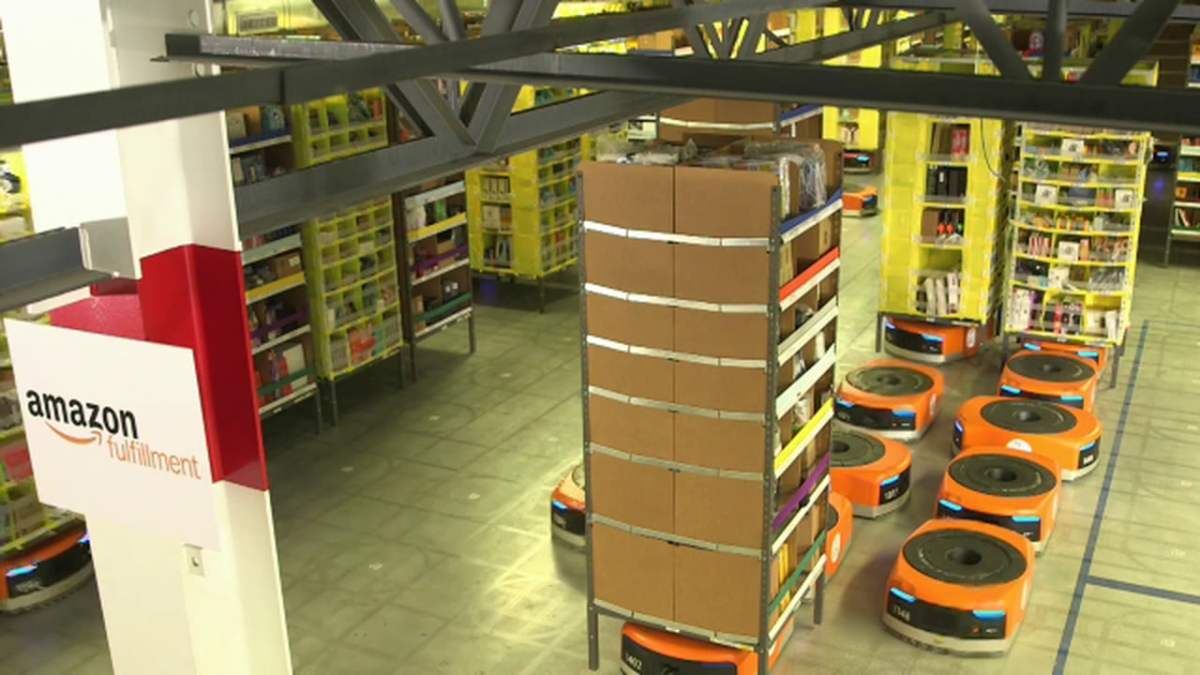
I’m not sure how this will play out, but I do know that today’s pundits are suggesting that the CEO’s role will be among the last to be taken out by automation.  That before the CEO role goes digital, manufacturing will be replaced by 3D printing, warehouse workers will be replaced by robots, delivery drivers will be replaced by automated trucks and drones, and even computer programmers will be replaced by computers who programmers have taught to program.  Considering that the new Atlas looks like its about to try out for Cirque, who knows.

Reddit Might’ve Just Saved Net Neutrality

Reddit is one of my primary information feeds.  Perhaps needless to say, I’m a fan.  Over the last week or so, I’ve observed something rather significant.

First, the gaming community mobilized against EA and their release of Star Wars: Battlefront 2.  EA’s new progression system meant that most of the game’s best content had to be earned.  Doesn’t sound too bad at first, until you find out that to unlock all the game’s content, it would take over 4500 hours, or $2,100.  To put that in perspective, if you were to play for 3 hours a day, 365 days a year, it would take you just over 4 years to unlock all the content.  To put that in perspective, the next generation of consoles is expected out before then.  And that $2100 that they’re hoping you’ll spend?  That’s above and beyond the $80 price tag for the game itself.  Short-sighted greediness for sure, but something was different this time.

Someone on Reddit had a rant, and EA replied with a classic, corporate speak, disingenuous answer.  I won’t bother repeating the entire reply as the opening sentence says it all:

“The intent is to provide players with a sense of pride and accomplishment for unlocking different heroes.”

I’m tempted to pick it apart, but I’d just be pointing out the obvious.  The response though, was something special.  That reply, became the most down-voted comment in the history of Reddit, earning over 600,000 demerits within just a few days.  Not only did this make the news across several major outlets and cause the execs at Disney to check in on EA, but EA also froze the in-game payment system until further notice.  A win?  Maybe,  but the gaming community isn’t buying it (literally) as they suspect EA will just unfreeze the payment system once enough gamers have caved in.  Well fortunately for the gamers, sales are down significantly compared to the game’s first installment and that’s starting to weigh on EA’s stock price.  Effectively, the gaming community found a way to mobilize on Reddit to deny EA the opportunity to make a really dumb decision.  All within a few days.  All with a few clicks.  Very interesting.

Among all the gaming hoopla, I saw a post that said something to the effect of, ‘If we cared half as much about Battlefront 2 as we did about net neutrality, we wouldn’t have to worry about net neutrality’.  Well, Reddit responded.  Earlier this week, for about 48 hours straight, Reddit’s entire front page was entirely dedicated to the mobilization for net neutrality.  This wasn’t a banner, or an ad, or front page image, it was what seemed to be thousands of posts, across thousands of sub-reddits, all being up-voted by the masses.  I was almost a little annoyed that for 2 days, I didn’t have normal access to one of my news feeds, but I couldn’t help but be in awe of what I was seeing.

I don’t know if the effort by Reddit or any of the other tech majors will be enough to stop this repeal.  Senators don’t pay nearly as much attention to internet chatter as they do to phone calls to their office.  Assuming an average call takes 10 minutes, an office could theoretically take 144 calls over a 24 hour period, or 1008 calls over the course of a week.  There are 100 senators, meaning a little over 100,000 calls would completely occupy the senate’s phone lines for a week.  If that happened, it would probably be the documented as one of the greatest public protests of all time.

At this point, I don’t have a clue how many up votes were cast across how many posts.  If I had guess, somewhere between 2-5 million, suggesting that the support is somewhere between 20-50 times what it should probably take to get the government to reconsider their position.

There are a few problems here.  First, why is it that in a democratic framework, where the people have not asked to repeal net neutrality, is the Chairman of the FCC introducing measures to repeal net neutrality?  The second problem is that internet community, arguably the constituents of this decision, are protesting this decision more fiercely than anything they’ve ever done – and it might be ignored.  Finally, and perhaps the worst problem is that we’re encouraged to think that calls into our senators’ offices are what will make the difference here but at this point, we know that’s bullshit.  They listen when they have to, and they use public backlash as a measure of what they can get away with while still being able to get re-elected.  In all likelihood, there are only two calls that would make a difference here:  If Ajit Pai received a call from the president, or if received a call from the chairman of Verizon.  Unfortunately for us, both have vested financial interests in restricting how the general population accesses information… so I don’t see it happening.

Doom and gloom, I know.  But there’s a bright side.  An awesome bright side.  Government needs tech, desperately.  I’ve been mulling over the idea of a app that would let governments better connect and engage with their people.  The current lines of communication between politicians and their constituents minimize inbound traffic which increases the disconnect.  Without a live connection to your people, it becomes a lot easier to pay attention to the lobbyist that just took you out for a nice steak dinner.  The people need a platform that lets them engage in real time with the people making these kinds of decisions, one that’s easy to use, that people would want to use, and one which decision makers would be held accountable to.  The way that EA and Disney reacted to the Star Wars: Battlefront 2 issue was the first time that any modern platform, let alone Reddit, ticked all those boxes.  If we manage to stop the repeal of net neutrality, I might even say proof of concept.

While Reddit might be the first to demonstrate the effectiveness of a platform like this, Reddit wasn’t designed to bridge the gap between a government and its people.  To do that, it might have to be a little less rough around the edges and frankly, that’s just not Reddit.  But that’s ok, because I have a hard time thinking that I’m the only one that’s been inspired here.  I suspect there are a lot of smart people out there who are seeing what I’m seeing.  We need to revolutionize the way that a government listens to its people and I think the public is figuring that out in a hurry.

One of the greatest counter-productive efforts throughout history has been the ruling class putting a greater emphasis on maintaining their power than helping their people.  A lot of us assumed that kind of behavior died off with the monarchies but somehow it’s more obvious today than ever.  I think we have the internet to thank for that.  The internet revolutionized how we access information which means the government is having a harder and harder time controlling the conversation.   They’re still trying, and it’s confusing the hell out of a lot of people, but the truth keeps finding a way.

The best thing about this for me is that when I keep pulling at that thread and try to visual where this takes us, I start to see something pretty special. If we could create a public that’s actively engaged with the governance issues that they’re interested in, able to control the public discourse, and aware of what one another is thinking in real-time, we have a highly capable voter base that’s capable of decentralizing a government’s power.  If we can connect that voter base to governing officials who are accountable to public discourse and the ongoing engagement of their constituents, we may just be able to put everyone back on the same team and point them in the same direction.  Wouldn’t that be neat.


Business Ideas: The Next Great Chat Platform

First came texting.. or sms.  Then came a slew of other chat platforms like BBM, Facebook Messenger, WhatsApp, Snap, and not to mention the messaging functions in other apps like Instagram.  I thought it was downright ridiculous what Facebook paid for Whatsapp considering that they could’ve bought all of Blackberry, including Blackberry’s BBM platform and security IP for a fraction of the price.  I could see a shift away from sms but considering that 99% of my texts were just brief text messages, all the added functionality on the newer platforms were lost on me.

The craze over Snapchat also seemed rather ridiculous.  The novelty of sending nudes that would auto-delete wore off pretty quickly when people remembered you could still take a screen shot, but the platform persisted.  I think I eventually figured out why Snapchat was so popular, and it’s rather interesting.  When pictures auto-delete, they don’t take up space on your phone, meaning you can send them frivolously.  A picture is worth a thousand words so a facial expression along with a text is a far richer message than just the text.  It’s also a bit of a game with all the added functionality of filters that continue to push the boundaries of augmented reality.  Effectively, it’s a superior mode of communication to classic texting and like with most things.. the kids are all over it while the old people are complaining about how they don’t understand kids these days.

So what’s the winning recipe?  Especially when you have such well established heavy-weights dominating the industry?  Simple solve the two most relevant problems.  Give them a centralized messaging platform and take an opensource approach to the development of add-ons and other features.

A central messaging platform would allow you to receive messages from all the other messaging platforms, features in tact.   The opensource approach to feature development and add-ons would effectively give the platform to the people, letting them continually develop what they wanted for it.  Almost a democratic approach to its evolution.

Anyone already using more than one platform would likely to gravitate to a centralized messaging hub.  Knowing that the hub maintains the features of all other major platforms, you wouldn’t even need to have the app on your phone after adding your account.  Keeping the feature development in the hands of the users would also ensure that the platform would always remain current.

Texting is like a utility.  Sending brief messages from person to person has become standard mode of communication and the technology is readily available.  Make it secure, make it quick, and have a rich set of continually updated features.  One and two are the responsibility of the business, number three are for the people.  I see a few other businesses who have pulled this off, and many more who might benefit by taking a closer look.

A Brief on Spectral Thinking

I’m sure I’ll dive into this again at a later date as my understanding of it continues to grow but I wanted to unload some of these thoughts for now.

There seems to be a natural evolution of thought from binary, to categorical, to spectral.

You have men and you have women.  It’s one or the other.  Except for intersex.  So 3 categories and everyone fits into one of those 3.  Except there’s at least 9 distinct categories of intersex.  So 11 categories, and that’s it.  Except these traits are expressed differently in each individual so it’s as if everyone ultimately ends up in their own category and it’s way too complicated to have infinite categories so why not just a spectrum?

You’re either gay or you’re straight.  It’s one or the other.  Except for bi.  So 3 categories and everyone fits into….

You’re either smart or you’re not…

You’re either privileged or you’re not…

It’s either black or white…

You’re either good or bad…

So if spectral thinking is next level, what’s after that?  My guess is another axis.

Duality of Privilege

When you apply the concept duality to privilege, it creates a rather interesting perspective.  Consider example A:

John is the child of a wealthy family.  His grandfather did very well, and John’s parents never had to work.  John grows up knowing that he won’t have to work either.  John’s parents lead a lavish lifestyle and give John is given everything that he asks for.

As a result of his unique circumstances, John has a unique perspective on life.  In that environment, I could see it being extremely challenging to develop qualities like a strong work ethic, perseverance, or the ability to deal with scarcity.  I could also see it being difficult to develop healthy relationships with others for a variety of reasons.  This doesn’t sound like a life of privilege to me.  Consider example B:

Jane is the daughter of two working class immigrants, and is raised in a rough neighborhood.   Jane grows up admiring the work ethic of her parents, knowing how their sacrifices let her grow up in a better place than where they were from.  Jane doesn’t have much growing up, but she appreciates what she has and learns how to work towards the things she wants.

In that environment, Jane was given several obstacles and challenges which John would be unlikely to face.  I’d like to think there are two ways to look at this.  You could say that John is privileged to not have to work for anything.  Or you could also say that Jane is privileged to have learned a great work ethic when she was young.  Perhaps there’s a key difference between these two though, in that Jane earned her work ethic while John didn’t earn his family’s wealth.  While that may be true, neither Jane nor John earned their circumstances – in this case, their family.  Had Jane been born to John’s family,   would she have turned out any differently?  Had John been born into Jane’s circumstances, would he have developed Jane’s work ethic?  Who’s life would you rather be born into?  If you’re like me and picked Jane’s life because it would probably lead to a more balanced, fulfilling, successful, and healthy life, wouldn’t that be the more privileged life?

When you think about our greats, from Muhammad Ali to Connor McGregor, from J Lo to Jay Z, from Abe Lincoln to Narendra Modi, from Indra Nooyi to Oprah Winfrey, from Ben Franklin to Steve Jobs, and from Charles Dickens to JK Rowling, you start to see a pattern of overcoming a more challenging set of circumstances from a young age.  You know who I don’t see?  I don’t see the children of billionaires.  How often do we see the children of wealthy families behaving as inspiring leaders that move the world forward in a positive direction?

I think that inheritance doesn’t exist in a meritocracy but that aside, I genuinely don’t have any issues with someone inheriting a fortune and then settling down and living a comfortable life with their family.  I just know that’s not the best environment for producing good human-beings.  It looks easy, and nice, and better, but it lacks the struggle, and it’s the struggle which defines us.

The most challenging moments of my life directly preceded my most significant moments of personal growth.  If this pattern stays true for others, is adversity not to be embraced as the fuel of progress?  If so, perhaps privilege represents someone who’s arrived at the destination without having made the journey.  If so, perhaps there’s an argument to be made for an empathetic approach to this whole ‘privilege’ thing.  If we’re lucky, it might be contagious.