Business Ideas: Take-a-Tic App

So I was at the city’s development permit office the other day and just like the DMV or any other government run admin set-up, they asked me to take a ticket and wait for my number to be called.  Problem is that this office takes about a day to get through the queue.  No joke, I’ve shown up at 9am up in the morning, only to be told at 445pm that they wouldn’t be able to get to me today.

Maybe that’s a bit of an exaggeration, but not by much.  I did arrive early in the morning and I did take a ticket but I didn’t stay there all day.  The ticket system that they have is digital and there’s a city URL which lets you monitor your queue so that you can go about your day and pop back in when your number is close.  That’s definitely a step up from having to commit and entire day to waiting in that line without knowing if they’ll get to you… but not by much.  It did however give me an idea.

A few years ago, a new steakhouse opened up in a trendy part of town and apparently it had the nicest patio in the whole city.  A few friends and I were hanging out at a friend’s place a few blocks away and thought we’d try them for dinner.  When we arrived, we were told that it would be an hour wait.  We were about to decline but they suggested we take what looked like a puck with a bunch of blinking lights on it.  Apparently, this contraption would blink and buzz when our table was available.  We figured sure, why not.  We went to a restaurant a few doors down and started with a few drinks but ended up ordering food anyways.  Ironically, the thing didn’t buzz until we were back at my friend’s place a few hours later.  Now it’s a coaster.

That was the first time I had seen one of those, but I’ve seen them plenty more since.  I don’t like it.  There’s a better way of doing this.

What if… there was an app for that?

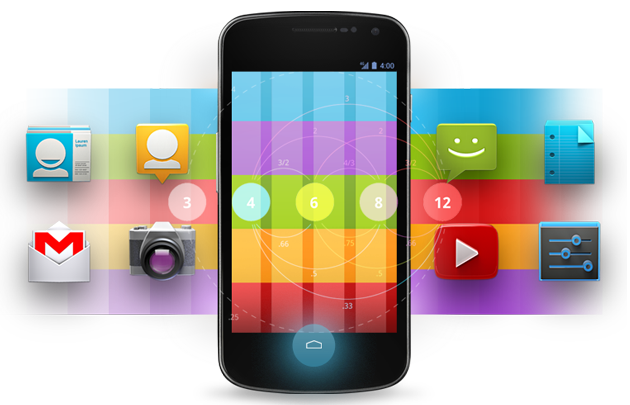
Let’s call this app take-a-tic, a shameless rip off of a friend’s company, Picatic.  I swear I’ll come up with a better name if I ever pull the trigger on this.  Anyways, the idea is that this is line-up management software.  Whether you’re a restaurant, a city by-law office, or somewhere in between, this just seems… more efficient.

Imagine walking into the DMV and seeing a crowd of people that probably amounts to a wait time of at least an hour.  Ain’t nobody got time for that.  So you head to the front counter and ‘take-a-tic’.  Instead of getting a piece of paper with a number on it, your position in the queue is loaded into your app.  It would be fun to think of all the paper we’d save but I’m far more interested in all the time we’d save.  Imagine being able to leave and getting a notification of when you should head back.  Imagine the app using your GPS, knowing how far you’ve gone, how long it’ll take to get back, and then takes that into consideration for when to send you a reminder.  Imagine being notified at the most inconvenient time and being able to hit the snooze button and let a few people go ahead of you without losing your place in line.  Not bad right?

While the convenience is certainly there for the user, it needs to make sense for the business as well.  There are more demands on our time than perhaps ever before and when a business says their cost savings is more important than your time.. it tends to not go over well.  When you show your customers that you value their time, you tend to end up with happy customers.  As with any scalable app, data analytics come into play and in this case, could help businesses better manage their queue.  Finally, and perhaps the most obvious: cost savings.  Without any need for hardware or physical tickets, the only real cost is the subscription to the service.

My first thought when looking to poke holes in this was nobody’s going to download an app just to wait in your line.  If they have the choice between that and the blinking coaster, they probably take the blinking coaster 8 out of 10 times.  But… what if everyone used the same app?  What if you downloaded the app for dinner a few weeks ago, but through out the year was able to use it at several other businesses?  What if every long lineup was equipped with this tech?  Well, now it has merit.  And if everyone is using it, it opens up a few more possibilities.

What if you were thinking about going to the DMV today but wasn’t sure about how to schedule it in?  What if you could open your app, search the DMV, and see what their queue was like today?  What if it came with comparisons to last week and this time last year?  What if you could even jump in the queue from home?  I’ll admit that last one might create more problems than it solves.. but maybe not.

If you were to give someone the ability to lineup from home, then you’re likely going to boost your no-show rate.  But what if there was a way to screen for that?  If everyone was using the app, perhaps businesses would have the ability to view a user’s no-show rate.  Or maybe it would make sense for the business to set the bar for who can line up from home.  For example, I probably show up to 95% of my commitments on time or early.  If a business could see that, they would have no issues with me jumping in the queue from home.  But lets say my no-show rate on the app was 50%, businesses would have the option to bounce that request.

What this all amounts to is efficiency of time.  I’m the first to avoid a place if it has a long line up.  45 minute wait for brunch?  No thanks.  Line up to get in the club?  Ya right.  Might be able to fit you in at the bar in about an hour?  Bite me.  But there are some lines you can’t avoid.  For those, I’d love to have access to something like this.  If it was mass-adopted, imagine how many hours could be used more efficiently.  Who knows, something like that might even boost GDP, haha.

A Digital Nation

I’m a problem solver by nature and the bigger the problem, the more interested I am in solving it.  In looking to solve things like gun violence, the application of democracy, educational inefficiencies, or health care, I often end up back in the same place – the system for creating change is deeply flawed.

I don’t mind a flawed system, most are.  What I do mind is a reluctance to face those flaws and solve them for the sake of progress.  In the world of business, poorly run companies go bankrupt.  In the world of politics, poorly run governments increase their national debt while raising tax on their citizens – and continue on.  In the great recession, the big 3 auto-manufacturers were running their businesses poorly and were on the verge of bankruptcy because of it.  Some argued that allowing them to fail would be catastrophic to the American economy and that losing those jobs were not an option.  I would argue that failing businesses should be allowed to fail so that from their ashes, ingenuity and integrity may have the opportunity to build something better.  Instead, 2 of those companies were bailed out and 10 years later, not much has changed.  Had they been allowed to fail, I wonder if Tesla would be the only major new entry in the auto-industry in the last several decades.

Tesla wasn’t the first crack at the electric car either.  We tried that back in the 90s but the system we exist in allows large business interests to influence government policy.  Auto-manufacturers weren’t overly interested in the R&D necessary to tackle electric cars and the oil industry wasn’t interested in the competition – so they lobbied.  A government which allows well-funded business interests to limit the innovation and competition in their industry is deeply flawed.

So how do you fix these problems?  Run as a member of a major party and try to create change from within?  I’ve experienced first hand how change from within can be an unrealistic approach, especially when you require the cooperation of those who would rather keep things the same.  Run as an independent?  Good luck getting any legislation passed in a 2 party system.  Try and operate outside the government?  They don’t take kindly to that.  Start your own country?  All viable land has already been claimed.

What to do.. what to do..

My pipe dream was to develop the technology necessary to build large, stable islands.  Once you built an island large enough, you could claim it and start your own country.  With a progressive game plan, you could easily lure great minds and great businesses.  Together, you could set the example for the rest of the world on how things could be done.

I think Elon Musk’s plan is similar, but he prefers the buffer of 50 million miles of empty space.  Given Russia’s announcement of their nuclear missile with indefinite range and all the other fun stuff going on, he might be on to something.

While these are fun contingency plans to think of, it’s overlooking something important.  Life always finds a way.  There’s a natural progression to what happens next and I think we’re starting to see it.

We’re moving from an analog reality to a digital reality.

I’ve watched a few animes over the years which touched on the subject of a futuristic society that was digitally based, and I couldn’t help but connect the dots.  When I saw the first trailer for Ready Player One, I knew it wasn’t just me seeing where we were headed.  With the film out last week and on my way to see it tonight, I wanted to put a journal entry together to document my thoughts before they’re further inspired by what looks to be a Spielberg masterpiece.

For anyone who still needs some context, a digital reality is the inevitable evolution of virtual reality.  Virtual reality as it exists today is rather limited but the momentum is there and we seem to be approaching a new plateau.  Within the R&D being done right now, there’s a focus on getting your brain to accept that the illusion is real.  If that sounds like hocus pocus, you’d be right.  For as long as magicians and illusionists have existed, there has been a craft designed around the manipulation of your senses.  As complex as the the mind is, and as good as it is at processing the outside world, it can be fooled.  Right now, the holy grail in virtual reality is getting your mind to forget that it’s within a virtual reality.

There’s an idea that we all hallucinate our own reality.  Some are quick to dismiss the thought, thinking that what they’re experiencing is the same reality that everyone else is experiencing – but they would be wrong.  Everyone’s mind is constantly collecting information from all of its senses and continually trying to make sense of all of its surroundings.  If those senses are your input, your hallucination is the digital rendering.  And this is the genius of true virtual reality, where all of your inputs have been taken over, and your mind hallucinates your new digital reality.

On the path to a true virtual reality, we have much ground to cover.  Sound is perhaps easiest, sight is where the most progress is being made today, and touch is where new ground is being broken.  There are a few people putting energy towards taste and smell but they don’t seem to be a priority right now (although I can’t help but think that smell may be one of the most immersive inputs).  The piece of tech which I’m most interested in at the moment is the haptic suit, a full body suit which allows for a very real sense of touch.  Within the next 10 years, I think it’s extremely likely that we’ll have sight, sound, and touch dialed in at a very high level.  But perhaps this is where we’ll plateau.  The biggest obstacle I see in VR is getting to the point where we have this brilliant digital universe to explore, only to be bumping into the couch and TV at home as we try.

As I’m trying to map out the future of virtual reality, I’m seeing an eventual division between analog and digital.  Analog will be with the helmet, headphones, haptic suit, and everything else.  Digital will be with what Elon and a few other think tanks are working on right now, a direct neural link.  I don’t understand the science well enough to know what the timeline on something like this is but with the ramp up of AI, it’ll probably come quicker than we’re ready for.  I suspect that this will be the technological jump that truly takes us into the digital age.

Today, so much of what we already do exists in the digital realm.  Our work, our social lives, the way we learn, the way we play, the way we explore, the way we communicate…  it’s now all digital first.  What some of us may not realize or want to accept is that we’re already one foot in the digital world.  We just have a low-bandwidth way of accessing it.  What if it wasn’t through our thumbs on our phones or fingers on our keyboards that we accessed our digital world?  What if we could interact with the digital world as quickly and accurately as we interact with the physical world?  What would that look like?  What would that lead to?  Or maybe there’s another way of looking at this.  If this is the direction we’re already headed in, what problem is this a solution to?

Well, what  if the current level of inequality in the world persisted?

Well, life finds a way…

I’ve watched very closely as the disposable income of the lower and middle class has evaporated over the past decades.  Half your income goes to tax, of what’s left, half goes to rent, of what’s left, you try to live a life you’re happy with.  It’s failing.  And when going outside begins to cost significantly more than staying in, dynamics start to change.

Personally, I’m feeling a very real resistance to leaving my house because of how much it costs.  Rent is so high right now that to remain on budget, I moved to the edge of the city I’m in.  Our city is paying the highest fuel costs in North America, which means anytime I want to go anywhere, I’m mindful of fuel and parking.  High costs of real estate mean business owners need to increase their prices to stay open.  That means the cost of eating out or shopping at local businesses becomes prohibitive.  I used to eat out several nights a week with friends for the company and experience.  Now we all stay in.

Stagnant wages in tandem with a drastic increase in the cost of living has left the younger generations without much to work with.  So we rose to the occasion and introduced the world to the sharing economy and decentralization.  Knowing this leaves me optimistic about our future.  I suppose I’m pretty optimistic in general, but that’s not to say that I don’t see the other side.

Through the trailers of Ready Player One, it looks to take place about 20-30 years in the future where many of today’s biggest problems haven’t been solved – in all likelihood, they’ve gotten worse.  In a world where the cost of living rises faster than income and a minimum wage doesn’t afford you a minimum lifestyle, in a world where government has forgotten its responsibility to the people and in a world where a handful of people horde the majority of the world’s wealth… where do the rest of us go?

According to Spielberg… into the Oasis.

I can’t help but think that I’m glimpsing that future now.  As the digital approach has made things easier and more convenient, we’ve adopted them.  From our finances to our social lives, we’re already most of the way there.  What I think may determine how quickly we move towards being fully immersed in this digital reality is going to be a function of cost.

If it continues to cost more to be outside than to stay in, we’re going to come up with better reasons for staying in.  Virtual commuting, virtual sporting events, virtual concerts, virtual dating… virtual sex… did I mention that porn was likely going to be one of the biggest drivers for advances in VR?  I digress.  If it costs $100 to go out and have the full analog experience, or $10 to have a virtual experience that’s most of the way there, which would you choose?  And what if you didn’t have $100?

Personally, I’m kind of excited about event-based virtual reality.  Big Jay Z concert on tonight?  Don’t want to spend $200 or deal with the lines and crowds?  No problem, just put on your VR headset with your VR headphones and you’ll be teleported to a front row seat where you can H to the Izzo along with everyone else.  Now imagine being ring-side for a big UFC match… or pitch-side at a world cup finals where you didn’t have to pay for the flight, hotel, and rental car.. and where you go back to your normal life when you take the VR kit off.  That sounds pretty darn neat to me.

While the cost of staying in versus going out is likely going to have a huge effect on the development curve of this technology, I don’t think it will change the destination.  There’s something extremely unique about a digital reality that’s so much harder to create in the physical world, and that’s freedom.  In Ready Player One’s digital reality, everyone creates an avatar for themselves to explore The Oasis.  Want to try out another gender for the day?  Go for it.  Want to be the giant robot from Pacific Rim? why not.  When the limitations of how you project yourself rest within your own imagination, I can’t help but think we’re going to encounter something very, very cool.  And it’s not just about the freedom to be who you want, it’s also the freedom to do what you want.

Something especially interesting about a digital reality is that it literally comes with it’s own laws of physics.  I have a recurring dream in which I have the ability to fly.  Sometimes it’s even lucid, so in a very real way, I’ve been able to experience what it’s like to fly around the city like a superhero.  Best thing ever.  Unless that experience would be available to me anytime I wanted.  Or maybe you’d rather fly around the galaxy and explore the other planets.  Imagine being able to shrink down to the size of an atom and explore molecular structure.  Or imagine having no physical form at all.  Crazy right?

I was watching Elon at SXSW a little while ago and what stood out most to me was something he said about AI.  At least in the early stages, it’ll be our responsibility to give direction to the AI – A prime directive.  As Hollywood would suggest, telling the AI to keep us safe probably isn’t the right approach.  We’re terrible at keeping ourselves safe and it’s a big part of how we’ve gotten this far.  So what directive do we give the AI?  According to Elon, it’s to maximize our freedom.  I can’t help but think that he’s done the same deep dive that I have and understands how central the concept of freedom is to the human condition.

If freedom is core to who we are, and essential to our growth and evolution as a species, shouldn’t we pursue the direction which affords us the most freedom?  Would that not be one which also frees us from the limitations of our physical selves?  Worth pondering.  But who’s to say that we’re not putting ourselves in the matrix by pursuing the future.  In The Matrix, it was a war between man and machine which led to machine dominating man and plugging them into the Matrix as batteries.  Maybe a more accurate future is one where we plug ourselves in and forget to leave.
EQ vs. IQ

I was reading an article the other day about hiring practices.  The article discussed how people used to hire for IQ, until they learned that it was better to hire for EQ.  An example they gave was how brilliant leaders would rarely fail for a lack of IQ, but failed often for a lack of EQ.  Interesting.  The article went on to talk about how people are now hiring for LQ, or a learning quotient.  Now they’re talking my language.  In an age where your ability to acquire knowledge is worth 10x your ability to retain it… this is the age of learning.

But I digress.

What inspired this entry was the article’s brief comparison between EQ and IQ, suggesting that EQ is a better predictor of job performance than IQ.  I can’t help but disagree with that.  And I can’t help but think that EQ, as the general public understands it, has become overvalued.

Before the Justin Trudeau ran for Prime Minister, I remember hearing all these comparisons to Pierre Trudeau, his dad who had also held the role of Canadian Prime Minister.  The one which stood out for me was from John Oliver and it was about IQ vs EQ.  Where Pierre Trudeau was intellectually brilliant, Justin Trudeau had Emotional Intelligence.  I’ve been paying very close attention to the value of EQ since and I’ve noticed a few things.

I guess the first thing we should do is define the term EQ.  Google defines it as “the capacity to be aware of, control, and express one’s emotions, and to handle interpersonal relationships judiciously and empathetically.” It’s the first time I’ve seen that definition and I quite like it.  Actually, I really like it.  Let’s break it down.  The first part is about self-awareness, self-expression, and the ability to control your emotions.  So often, someone who is highly emotional qualifies themselves as having a high EQ but that doesn’t seem to be the case.  If being aware of your emotions and having an ability to control them is part of EQ, that makes a lot of sense.  The second part is about being able to understand the emotions of others while handling those relationships fairly.  This is where things get interesting.

Emotions are part of the human blueprint.  To assume they don’t exist is incorrect.  To assume they can be suppressed indefinitely is unhealthy.  To be aware of, to be in control of, and being able to experience emotions seems to be the philosophy of emotional intelligence and I can get behind that.  Being able to understand the emotions of others, as a non-verbal language… I can get behind that, too.  Where I think the modern understanding of EQ falls apart is when handling interpersonal relationships judiciously.

I’m often criticized for being insensitive.  I’m also recognized as being very honest.

If you were presented with the option of telling someone what they wanted to hear and making them feel good about themselves, or telling them a hard truth and making them feel bad about themselves, which would you choose?

When people discuss individuals with a high EQ, they seem to be discussing people who are skilled at telling people what they want to hear.  It’s like a comedian walking into a room, being able to feel out the crowd, and then delivering the kinda jokes they want to hear.  When you hear what you want to hear, you feel good about yourself, and when you feel good about yourself, you tend to think highly of the person who helped you get there.  That’s what I see when I see EQ being discussed in the mainstream,and it’s wrong.

In the age of thought bubbles and echo chambers, we desperately need to move away from the people who are skilled at telling us what we want to hear.  Those who prioritize telling us what we want to hear are selfish.  For them, our long-term well-being is secondary to feeling good in this moment.  And feeling good in this moment almost always produces what they’re actually looking for.. a date, a sale, a vote.. and even a presidency.  And it’s extremely unhealthy.

There’s a 50 Cent song from back in the day called A Baltimore Love Thing.  50 raps from the perspective of heroin.  If you’d like to know what a relationship looks like when the other person cares more about making you feel good in the moment than your long-term health, that’s it.  And if you’re looking towards the other end of the spectrum, think exercise.  It always sucks at first, and the harder the exercise, the more it burns.  But the more you do it, the better you feel about and the healthier you are.

And this brings me back to my personal struggle, perhaps why this topic is of such interest to me.

Over and over, I’m labelled as low EQ because being capable of understanding and controlling my emotions is perceived as suppressing or not engaging with them.  Over and over, I’m labelled as insensitive because I’m unafraid of delivering the hard truths that help people the most.  Over and over I’m told that I’m not empathetic towards others because I’d rather motivate and inspire than offer blind support.  I’m done accepting those criticisms.

I am not without room for improvement, but I am not without EQ.


The Illusion Of Privacy

Every so often, I come up with an idea which I think is worth writing about.  When I do, I make a note and then come back to it when I’m ready.  This one is from December, but all the hype around Facebook and Cambridge Analytica suggested it was time.

There seems to be a fair bit of traction behind the #deletefacebook movement and I find that surprising.  But then, less so.

We seem to be in an age where we quickly look for someone to blame.  I can relate to looking at a problem and immediately looking to identify the cause, but there’s often a wide gap between the cause of a problem and someone you can blame.  In many cases, the individual being blamed, even when ‘justified’, is a symptom of a bigger problem that isn’t being acknowledged.  It’s why problems usually find ways to persist when you remove the symptom.

In a world where people are quickly looking to label the bad guy, I find a lot of people blaming businesses or technology.  Something something corporations are ruining the world.  Something something technology is destroying humanity.  I find this perspective rather challenging.  As far as I know, technology and business becomes rather hollow when you remove people from the equation.  In that sense, both are extensions of our own humanity.  Both are tools we’ve developed over time to help us accomplish more with less.  Understanding that these tools are a reflection of our own humanity, we accept that we can be capable of both good and evil.  From fireworks to gunpowder, from missiles to rockets.

What I’m getting at is that if we want to move past the blame game and start looking to solve the problems we’re facing, we need to look at the people.  It’s people who are behind the development of this technology.  It’s people who are behind the companies like Cambridge Analytica.  And it’s people who are allowing themselves to be taken advantage of by both.  So it’s about time we look at the people involved.

For the most part, I place very little responsibility on the tech developers at Facebook, or anywhere else for that matter.  Almost every piece of technology that’s made, is made to solve a problem.  If it doesn’t solve a problem, it becomes obselete.  Throughout history, people have shown a desire to be more connected with one another.  Technological advancements in transportation brought us from horseback riding to hyperloops.  In communication, we went from telegraphs to texting.  Along the way, we realize that we didn’t have to physically be in the same place to have a social interaction with someone.  To some extent, we realized that we didn’t even need the other person to be there at all.  Asian Avenue, Apartment 107, Black Planet, Myspace… all pre-cursors to Facebook and show a continuum of what we were trying to accomplish.  The internet gave us this great platform where we could connect digitally instead of physically, and it was a dynamic that we clearly wanted to explore.  Had it not been Facebook, it would’ve been someone else.  And to think that this evolution stops at Facebook would be be unwise.  Social Media wasn’t a lab experiment from Silicon Valley, it was a social evolution, started by, driven by, and consumed by people.  Facebook just happens to be the playground we chose to play in today.

The blade is a tool, indifferent to whether it cuts the flesh of your enemies or a dinner for your friends.  It’s the person who chooses how to use the tool.  Could Facebook have made it more difficult for Cambridge Analytica to do what they did?  Probably.  What happened to #DontBlameTheVictim?  Maybe it only applies to people..  Regardless, understanding what happened at Cambridge Analytica is definitely the fun part.

Cambridge Analytica was a firm who realized that Facebook could be used as a platform for modern political propaganda and did so with a high level of efficacy.  That’s it.  I’m trying to see why it’s more complicated and complex than this, and I don’t think it is.  Propaganda isn’t a new or foreign concept.  For as long as there’s been politics, there have been people trying to manipulate the message for the sake of political gain.  And America has probably used those tools more frequently and effectively than any other government in the last 100 years.  How much has been used against its own citizens and how much has been used in countries abroad is anyone’s guess.  But just as propaganda found its way into print media, broadcast media, and digital media, it would surely make its way into social media.

Cambridge Analytica looks like they may have been up to some other shady political tactics.  If they happened, it just strengthens the case that politics desperately needs to be removed from governance.  But politics is how the powerful stay in power so perhaps that’s too big of a topic to tackle here.  What is worth focusing on though is what Cambridge Analytica was able to do and why they were able to do it.  After having watched all the hidden camera footage from Channel 4, one thing stood out to me more than anything else – their goal of targeting people’s fears.

The only thing that Facebook really provided Cambridge Analytica with were details on the things that you liked and didn’t like.  The sinister part was when they took the details of each voter profile and used them to created targeted groups based on what they were most afraid of.  If you were from a southern community which had lost jobs to immigrants, it was ‘build that wall’.  If you were afraid of a change in gun legislation, it was ‘Hillary will take your guns’.  If you were concerned with political corruption, it was ‘drain the swamp’.  Whatever you were afraid of, they would play to your fears.  While most people know that making decisions from a place of fear isn’t great, not everybody knows why.   Turns out it’s literally the wrong part of the brain for making these decisions.  The part of the brain which governs emotions like fear, is different from the part of the brain which governs rational thought.  People are navigating this propaganda in an emotional state of mind instead of a rational state of mind.  Instead of being able to think critically and rationally about the content that’s in front of them, they’re thinking emotionally and looking for an enemy.

And this is where I let Cambridge Analytica off the hook.  They should be held accountable for what they did, but then, we should also be held accountable for what we let them do.

The first few times I saw a juicy headline on Facebook, I definitely clicked through.  Juicy headlines and misdirection have been around since well before the Facebook news feed so it’s not like I was being duped, I was just sufficiently curious.  But each time was a let down.  The headline was always better than the content.  So I learned to stop clicking on what was eventually termed ‘click-bait’.  Seemed straight forward.

Over time, digital publications like BuzzFeed and Vice started popping up on my timeline.  They were far more legitimate than the click-bait articles I was used to, but something else was going on.  These publications also realized they had tapped into fear.  The fear of being a racist, the fear of being a sexist, the fear of being transphobic, and perhaps most importantly, the fear of being on the wrong side of a movement which seemed to be based on the virtuous pursuit of equality.  Their approach was more nuanced than Cambridge Analytica.  Instead of pushing raw propaganda to their audience, these digital publications started editing interviews or not properly sourcing articles, looking to craft a narrative which their audience was hungry for.  They were more interested in providing a narrative which made you feel good about what you already thought.  When you think you have the moral high ground, confirmation bias can be a dangerous thing.

But not everyone fell for it.

Not everyone took Jordan Peterson’s Vice interview at face value.  Not everyone liked or shared memes saying ‘The South Will Rise Again’.  Not everyone saw a comment section where everyone was agreeing with them and jumped right in.  Not everyone avoided a perspective that challenged their own.  And for those who did debate, not everyone approached it as a battle of them versus us.  Some of us couldn’t help but look at it as us versus the problem.

The problem isn’t privacy.  The problem isn’t Facebook.  The problem isn’t even Cambridge Analytica or the shady politicians they help put in positions of power.  The problem is us.

The problem is us.

When tools stop working, people stop using them.  Propaganda is the tool, and it will be used as long as we keep letting it work.  If we #deletefacebook, I can all but guarantee that this propaganda will follow us whichever social media channel we choose to spend those hours.  If we put the team at Cambridge Analytica behind bars, I can all but guarantee that another organization will take its place.  So why is our reaction still to place blame instead of facing the reality that this is about accountability.

If you think that sharing information about yourself makes you a better target for people looking to take advantage of you, welcome to the world.  But there’s hope.. and perhaps things are darkest before dawn.

I’ve learned to live my life like an open book.  I’ve abandoned the illusion of privacy.  I understand that information is more valuable when fewer people have it, but I also understand that knowledge is most valuable when everyone has it.  Digging deep on why people value privacy, it almost always comes back to a fear of what others will do with their private information.  So I choose to live without a fear of what others would do if they knew everything about me.

And – it – is – glorious!

I really couldn’t care less if Facebook showed to the public: my health records, my genealogy, my personal finances, my relationship history, purchasing behaviour… all of it.  To some extent, I wish they would.  I would gladly take that risk to try and demonstrate that transparency isn’t itself a risk.  In reality, our ability to share more information with one another has been at the core of every big leap forward our species has taken.  From a spoken language, to a written language, to the printing press, to the internet.  We just seem to have momentary lapses in judgement where we’re afraid of what will happen when only some of us can access that information.

We’ve now arrived at a point where between Facebook, Google, Apple and the NSA, there isn’t much that isn’t known about us.  The data is already being collected and unless you’re keen to go live off the grid, it won’t stop.  Who gets access to that data is largely out of our control.  There will always be bad actors with innovative ideas on how to abuse that dynamic… which means we either have to accept that we’re screwed, or find a way to rise above it.  I choose to rise above it.

My choice is that when someone takes the time to learn about me, and to use that information to take advantage of me, I’m prepared.  Not only am I prepared to be critical of the information I’m being presented with, I’m also prepared to be critical of my own actions if I allow myself to be misled.  It’s not always easy and I’m not always perfect, but when you let go of right and wrong and prioritize the truth, seeing through the noise becomes much easier.

I think that everyone’s life will be impeded by dishonesty and misdirection at some point, but I think it’s worth considering that it’s our tendency to be dishonest with ourselves which impedes our progress most.  A fear of how others might perceive us and how that might impact our lives.  But what happens when we let that fear guide us?  What happens when everyone had the ability to project to the world what they thought the world wanted of us?  Social Media gave us that ability and we’ve used it to create noise.  It’s a feedback loop of confusion where people struggle to understand the disconnect between how we present ourselves and who we really are.  And the closer we get to facing the truth, the louder we yell ‘Privacy!’

Or we could just let go.  When I imagine a world that has abandoned the premise of privacy, I see a world which has embraced the value of transparency.  I see a world that has truly realized the value of honesty.  A world where every piece of information is always available to every person.  I can’t help but think about that being the ultimate equalizer.


When the only thing that looks the way you wanted it to is your LinkedIn profile

A few days ago, a good friend sent me the ‘Corporate Fuckboi Starter Pack’.  2 years ago, I would’ve checked off just about every god damn box on that list.  I wasn’t big on happy hours or energy drinks, but the rest was close enough.  On the surface, things looked good.  They looked a lot like my LinkedIn profile.

I used to joke around and say that on paper, I was the guy that every girl’s parents hoped they would bring home:  Nice guy, clean cut, university educated, good job, bright future, etc., etc.  The rest was a bit complicated.

I think I grew up with the wrong idea about personal and professional development.  Rather than looking at it like an exploratory exercise or a journey to be enjoyed, I looked at it like a race that I was supposed to win.  I would pick a path based on what those around me respected most.  It rarely had anything to do with who I was, and everything to do with how high of a bar I could set for myself. And I committed myself to getting there faster than anyone else.  In the process, I learned to prioritize income, status, resources, and eventually, making a positive impact in the world.

Part of that competitive effort was building the kind of track record which would allow me to compete at the higher levels.  Enter LinkedIn.  Between my volunteer and professional efforts since 2009, my resume now read Branch Manager, Director, Director, President, Director, Investment Advisor, Vice President, Vice President.  Had I told a younger me that this is what my resume would look like at 32, he would’ve been pumped.  Would he believe me if I told him that it’s all bullshit?

What if I told a younger me that every minute spent manufacturing this impression of who I thought I was supposed to be, was a minute wasted?  Not because it didn’t get me ahead.  But instead, because it held me back.

I often think about what would’ve happened to me had things played out differently at the bank.  I was on pace to earn a 7 figure income by my mid-30s.  I was very good at my job.  My clients were very appreciative of my efforts.  Income, status, making the world a better place for my clients and then having the ability to do a fair bit of philanthropy?  That was the plan… doesn’t sound so bad does it?

But that person isn’t me.  It almost was.  Maybe it still is in a parallel universe.  But it isn’t me now.  My path will be more difficult.  My path will be more interesting.  My path will not be defined by milestones on my LinkedIn resume.  I’ve lost all interest in becoming what other people expect of me.

Trying to become the best version of what others expected of me is what got me here.  That and my competitive drive to do it better than anyone else.  I think the competitive drive is baked into my DNA so my sincerest apologies for everyone who has to deal with that.  But now, it’s time to match that drive with becoming the best version of what I expect from myself.

So what do I expect from myself?  And this is where I can’t help but pull in data from all around me.  What do my friends expect from me?  What about my little sister?  What would my dad expect from me if he was still alive?  What does the world expect from me?  I am fundamentally connected to the universe around me.  When I drop, they ripple.  Those ripples are a reflection of what I am and how I behave, but it’s incredibly hard to reverse engineer that understanding.  And even if I could, would they just reflect the giant question mark that I’ve already hung over my own head?  Or maybe I’m going about it all wrong.  Maybe there’s a different approach…

I’m starting to see these inflection points in my life where things could’ve gone very differently.  I can see an alternate reality in which I’d probably already be married.  I can see an alternate reality in which I was still at the bank.  I can see an alternate reality in which I’m no longer living in the city I grew up in.  And the variables which would’ve led to each were largely out of my control.  So how much control do I really have?

Or maybe it’s not about control.  Maybe it’s about awareness.

Maybe it’s not about choosing a future, and forcing it into reality.  Maybe it’s about understanding where the future is headed, and being aware of your place in all of it.  Maybe it’s about understanding your path more than choosing it.

My LinkedIn profile is an example of someone who thought they knew more than they did and a person who thought they could force a possible future into reality.  That person feels like a dummy.  Moving forward, I’m looking forward to seeing how my LinkedIn resume develops as a reflection of what I find most interesting and engaging.  If I’m fortunate, I’ll find a way to live the rest of my life like that.

Walking Through Life with the Confidence of a Honey Badger

Several years ago, I watched ‘The Crazy Nastyass Honey Badger” video.  As entertaining as that video was, it was also the first time I had really seen a Honey Badger in action.  King Cobras, bees, jackals.. The Honey Badger did not give a shit.

Last week, I found out that the skin of a Honey Badger was so durable, that it could withstand a machete, arrows, and spears.  I suppose there can be some real value in having thick skin.  And off my mind went…

I read a book a couple years ago which discussed the concept of not taking anything personally.  The idea is that whatever someone was saying about you or to you, was a reflection of how they were experiencing their reality, more than it was a reflection of you.  If a random stranger yelled a racial slur at you, there’s a good chance that outburst had more to do with them than it did with you.  Even if that random stranger said something flattering, the premise is the same.  The goal is to understand why something is being said, rather than to take what is being said at face value.

I think there’s a lot of wisdom in this approach.  There are times where someone paid me a compliment that I really enjoyed hearing, and instead of understanding why they had paid me a compliment, I accepted it as a true statement.  Later, I would discover that I had been misled, not because the other person was malicious in their intentions, but because I misunderstood their perspective or what they were trying to communicate.  If your priority is to have an accurate understanding of the world, you need to be mindful of the prejudice and bias of how others see the world – even when it’s in your favor.

While I appreciate how this approach has helped keep my ego in check, it’s arguably most effective as a defensive measure.  While I’m not perfect, I do my best to walk through life without fear, anger, or hate.  And I’m getting pretty darn good at it.  How?  I walk through life with the confidence of a Honey Badger.

I wasn’t born with thick skin.  These callouses were earned.  A lot of it was scar tissue.

I entered into adulthood understanding that sensitivity was not always a strength.  Being sensitive worked against me more often that it worked in my favor because a high degree of sensitivity would bypass my ability to think about things rationally – and I would just react.  More often than not, these reactions were extremely counter-productive.  I had to learn to handle things differently.

In my 20s, I learned the value of rational thought.  Emotions and sensitivity became something to control, not something which I would let control me.  Someone could call me the meanest thing they could come up with, and I’d be more likely to end up at a point of compassion than of anger.  I would also have more confidence in my ability to turn that person into a friend than an enemy.  And even if I couldn’t make any progress with that individual, I could move on from the situation knowing that I handled the situation the best I could and that I may have created an opening for someone else down the road.  There was something enlightened about this approach, and yet it left me feeling invincible.

I now walk through life with the confidence of a Honey Badger, knowing that there’s very little that others can do to hurt me.  And it’s changed the way I see the world.  Without fear, there is no hate.  Without hate, there is no anger.  Without fear, hate, or anger, Love is a much more natural state of mind.  Walking through life, ready to love… I can’t help but think this is a far more productive approach than walking through life ready to fear.

Now in my 30s, I’m trying to incorporate a more balanced approach, inclusive of sensitivity and emotions.  These days, I understand sensitivity to be like a dial on an instrument which collects data. If you turn the dial to zero, then you’ll collect no new information and you might as well not have the instrument at all.  If you turn the dial on the instrument to 100, you better have the ability to process all that information accurately.  I suspect that most people have a hard time adjusting that dial themselves.  I’ve seen a lot of men out there who have set that dial as low as possible and go through life too insensitive to notice the emotional nuances of those around them.  I’ve also seen a lot of women out there who have their dial set rather high, and go through life overly sensitive to the actions and words of those around them.  I doubt either is healthy.

A thick skin doesn’t make you insensitive to the world around you.  A thick skin is the difference between someone wanting to hurt you and someone being able to hurt you.  And when you realize that this dynamic exists entirely in your head, as an understanding of how the world works, it really does stand out to me as something special.  Imagine a world, full of people who are never offended, never angry, never fearful.  That world often exists inside my head… but then I venture out into the real world and I’m reminded of how much fear, hate, and despair exists in the world.

I’m not entirely sure how to navigate what comes next…  But I do know how I’ll carry myself in the process.


Back from the Depths

Back in December, I decided that enough was enough.  I had spent so much time in a holding pattern with the important parts of my life… waiting for key events to launch me back into the state of mind I enjoyed most.  I knew it wasn’t the best approach I could take, but I was smoking so much weed that I lacked the motivation to break that routine.  Until I started thinking more about Max.

Max was an ex-girlfriend from a few years ago.  We broke up because she was consumed with the idea of leaving a city she had never left and having a chance to explore a world she had never seen.  I’m glad I didn’t try to hold her back from that.

Last year, my whole world came crashing down and I was fortunate enough to have the time and space to reflect on all that had led up to that moment.  For me to understand all that had happened, I needed to be able to see through the noise.  The noise of the outside world, the noise of those who knew me, and even the noise of what I would tell myself.  To truly understand all that had happened, I had to prioritize the truth above all else.  What I found, opened my eyes in a way they had never been opened.

It was through that experience, that I learned to see Max in a much different light.  I thought I had always respected and appreciated her… but I’m not so sure anymore.  At least not in the way it mattered.  Back then, it was about what she meant to me.  Now it has much less to do with me, and much more to do with having a deeper understanding of who she was, and just being in awe of it.

One of the most important things I had learned about myself last year was that I needed to stop trying to force things into reality.  In many ways, it feels like I’ve spent most of my life swimming against the current.  When things got easy, I’d find ways to make them hard.  Many of my life’s accomplishments have been defined by fighting for every inch.  I think there’s a time and a place to fight for what you love, but I have no interest in living a life defined by conflict.  Nor do I have any interest in living a life defined by milestones, or accomplishments, or any other tangible metric.  I realized I wanted to live my life honestly, fearlessly, and with an open mind… and let the universe handle the rest.  And that’s when I couldn’t get Max out of my mind.  She lived by those virtues more so than anyone I’ve ever known.  In some sense, she had become my north star.

I couldn’t help but ask myself, what if we had another shot?  The first thing that came to mind was that I didn’t deserve it.  It was nice that I had gained a deeper appreciation for who she was, but I’d be embarrassed to reintroduce her to the rest of me.  Enough was enough.

I decided that even if it didn’t end up being her, she had set the bar.  For me to be with someone like her, I needed to be… better.  So I stopped smoking weed.  Started training twice a day, 6 days a week.  Started reading a lot more.  Started writing a lot more.  I was still in a holding pattern with my career, but I was determined to break that holding pattern for everything else.  It felt awesome.  So I decided to send her a note.  It was a YouTube video, on Christmas day, apologizing for my mid-steps and thanking her for all that she had inspired.

I didn’t send it expecting a response, but I knew it was likely.  It arrived about a month later and it left me with mixed emotions.  She was surprised, but happy to hear from me.   She said some kind things and then asked if I was up for a call, hoping we could have a real conversation.  I responded later that day saying I would be happy to make the time.  Then radio silence.

A week later, I separated my shoulder playing basketball.  The pain was pretty bad for the first week, enough to keep me from sleeping.  So back to cannabis I went.  Still nothing from Max.

A week after that, Facebook reminded me that it was an old fling’s birthday.  We’ll call her Mia.  I sent her a cake emoji, she sent me a cheers emoji, and we started texting for a bit.  We were both big into superhero movies so I asked if she wanted to go see Black Panther.  She was all for it.  Neither of us had been on a date in a year so we figured maybe this was what we both needed.  There was certainly a part of me that thought if I was going on a real date with a real girl, it would be easier to understand that Max probably wasn’t a real option.  Or maybe I was just hedging my bets on what was looking more and more like a disinterested Max.

Then Mia flaked out and went radio silent.  It’s why we stopped dating the first time, so I was tempted to write her off again.  Instead, I told her no hard feelings, that I hoped she was ok, and that if she ever wanted to let me in, I was curious to know why she was like this from time to time.   She apologized, said she wasn’t trying to be flaky but it was a combination of being really busy and a little awkward around me.  I asked her what she thought I should do.  She asked why I wanted to reconnect, so I told her.  She was into it, said we should probably catch up, and conceded with a smile that this was the original plan.

At this point I still hadn’t heard from Max, and I think my first reaction was being annoyed.  But I’m better than that.  Even if it had been a month, I knew she was likely busy, and I needed to be ok with not being a priority.  But I couldn’t help but reach out, so I asked what was on her mind.

She responded shortly after, saying that she was dealing with a few things and then offered up a rather disheartening email.  Knowing that she still cared about me and always being honest, she told me what she really thought about the video I had sent her.  In the video, I told her that I was on a new path, and that she was the only one who I knew who had the courage and ability to walk that path beside me and not behind me.  I was alluding to a path defined by the journey, not the destination.  A path defined by a compass of honesty, fearlessness, and open-mindedness, not milestones like income or assets.  It was a path I thought she was already on.  She took it as me thinking of her as an accessory to a path which I was taking.  It was frustrating to be misunderstood like that.  But I had to appreciate that her idea of who I was, was largely influenced by the person I was when we dated.  And maybe I was a bigger ass than I realized.

Truth is, as frustrating as that email was, it let me know that she was still exactly who I hoped she was.  She was brutally honest.  Talked about how what she wanted in a partner was a true equal.  Said that she could still see growth in me and was really happy for how far I had come.  She also apologized for taking so long to reply, but said it was a tough email to write because of how much she cared for me.  She wrapped up by saying that she was about to spend the next 10 days in Sri Lanka with some free time if I wanted to chat.

A couple more emails went back and forth and things were positive.  I could tell that she was trying to balance a few different thoughts and emotions, on top of all that she was dealing with in her in life.  If I were to guess what those thoughts and emotions were, I’d guess a lingering sense of disappointment from letting her down in our relationship, a healthy skepticism of where this was all coming from, and a genuine interest in my well-being.  She gave me her new number and suggested we chat on whatsapp.  So I did and we did.

Within the first few messages, I told her that I still wanted to respond to her last email.  She was still making assumptions based on who I was, and I was so eager to show her who I had become.  She welcomed the email, but didn’t respond to it.  What is it with people and radio silence?  Is it a girl thing?  A dating thing?  A me thing?  Am I still unreasonable today?  These are the kinds of things that drive me a little nutty, but I choose to react sensibly.  I took a night off cannabis earlier this week and went into full insomnia mode.  I couldn’t help but think of the situation.  I thought that perhaps it was unfair of me to put this on her at a time in her life where she had other things which were more important to focus on.  All I wanted was for her to understand what had happened to me and appreciate what it meant to the hypothetical ‘us’.  Beyond that, I had no expectations.  But just because that was important to me, doesn’t mean it had to be important to her.  So I grabbed my phone and decided to send her a message that would basically say no hard feelings, I know you have a lot going on, and if you ever feel compelled, here’s a link to my blog.  The hope was that when she was ready, she’d see the journey I took, and see the steps that I’ve taken to arrive at who I am today.  She’s also see my ENTJ Love Story which is one of my life’s most honest moments, and all about her.  Instead I accidentally hit the call button.

I hit the hang-up button like I was button mashing a Mario Party game but to no avail. The call never went through, but she noticed and asked what’s up?  I was a little tongue-tied.  It was difficult to express myself in short text messages, when she was still making so many assumptions about who I am, based on who I was.  We texted until about 4am, but most of that was me deleting and rewriting messages, desperate not to be misunderstood.

She told me that her stance on us was that she wasn’t in the right mindset to be thinking about it since she didn’t have a clue which city she’d be living in once she graduated.  I told her it might be an interesting conversation to have, but not one that I was ready for either.  Truth is, I still have more ground that I need to cover before I would consider myself ready to be in that caliber of a relationship.  What I did want to know is that if the path that I was on was aligned with hers.

When we broke up, we each recognized that we had things that we needed to work on.  And if we did, we could come back to each other and our relationship would be that much stronger.  At the time, I didn’t realize how much of that work was mine to be had, nor did I realize that it would end up being me that would be more compatible to who she was, and not her who would become more compatible to who I was.  But I didn’t know for sure, because all I had to work with was my memory of who she was.

She said it was tough to talk about because she would think about how we were before and it was like she was talking to a whole new person.  I breathed a sigh of relief… she was finally seeing what I was trying to show her.  Then she told me that one of our biggest issues was how dominant I was.  No one had ever described me as dominant in a relationship before, but it was easy to understand why.  I’m happy she said it.  She went on to say that I would push my point of view rather aggressively, and wasn’t the best at taking the time to reflect on my stance.  She was right.  But then she said that it seemed like I was doing that now… and my heart sank.

I conceded that I had issues.  Give me a woman who follows my lead and I get bored.  Give me a woman who challenges me and I compete to win.  Her emails reminded me of these issues, but they also reminded me of how far I had come.  I told her I hoped she’d have a chance to get to know this person, because she played a very real role in where I am now.  She said that she was happy, but was concerned that it didn’t happen until years later.  I responded by saying that I wasn’t in the right state of mind to learn these things when we dated.  I was consumed with becoming what I thought the world expected of me, not taking the time to figure out who I really was and what I had to offer to the world.  She said she was proud, and it sounded like I was on the right track.

And that was it.  We have no future plans to talk.  I have no interest in taking up any more of her time.  I don’t think she’s all that interested in putting thought into this either… but I know I’ve planted a seed.  What I wanted most was to know if any of what I thought or felt was real.  But once I did, I cared too much to do nothing, and knew better than to chase after her.  So I planted a seed.  I haven’t a clue what happens next.  I’d be lying if there wasn’t a part of me thinking about booking a ticket to her grad ceremony but I’m not sure if it’ll be a sign of stalking, support, or a grand gesture of romance.  Especially since my intentions are probably a combination of all three.  But then the pragmatic side of me says there’s at least a 50/50 chance that it goes horribly wrong.  But then the romantic says 50/50 are great odds when you’re talking about something this meaningful.

All I know is that having a chance to reconnect with her and put this out there has left me with a sense of peace.  The rest of my life still feels like the eye of the storm, but at least here, I’ve made progress.

Power Vs. Strength

When dealing in abstract concepts like these, it can be difficult to have a real conversation without first agreeing on how to define the terms.  I think that a lot of people use power and strength interchangeably, yet I can’t help but think that they differ in very important ways.

Power corrupts.  Absolute power corrupts absolutely.  I was taught that quote by a very influential history teacher in high school and it has continued to echo through my mind since.  I can’t help but be reminded of it when I see people in positions of power put the needs of the few before the needs of the many.  It’s as if there’s something inherently inefficient about power.

When I think of strength, it’s similar to power.  But not quite.  Strength is almost like the potential of power.  Unused power.  A visual of strength does not require a display of aggression.  Perhaps there’s a duality here.  Is power to offense as strength is to defense?

It’s interesting, you could say that someone is both powerful and weak at the same time.  A frail old king is both re(g)ally powerful and physically weak.  Politicians are known for having political power but weak integrity.  Movies are constantly filled with villains who wield vast power, but lack a strength of character.  I’m not sure if I know of any villains who have a great strength of character, but wield little power.  In many cases, is that not the hero?  The unassuming, jacked, strong jaw line with a warm smile kinda hero?

Analyzing this in the abstract is usually a journey down the rabbit hole, but there are some examples that help me clarify what I’m thinking.

Name calling has gotten out of control.  For most of my life, I was taught not to feed into it.  To walk away.  To appreciate that the person doing the name calling is probably doing so because they’re battling their own demons.  It was tough when I was younger but it’s second nature now.  Now, when someone’s hostile towards me, I’m much more likely to view the situation with compassion than anger and I can’t help but think that makes me strong.  Moving through life, invulnerable to the malicious attitudes of others is really something else… I highly recommend it.

Yet I seem to be in the minority.  Rather than seeing it as an issue of personal strength, compassion, and helping someone move beyond their own issues, it’s about power.  The victim being name called is no longer interested in making themselves stronger, they’re interested in becoming more powerful.  This is the era of the victim shaming the bully.

If we could teach everyone the simple philosophy of not taking things personally, the effectiveness of name calling would disappear.  When something is no longer effective, we tend to stop using it.  We become stronger, we become wiser, and we move forward.  Instead, we’re more interested in giving the victims the power to hurt them back.  Laws are being changed for compelled speech.  What does being triggered in this context mean?  What happens when being triggered is an excuse to tap into that power?

I also can’t help but see this dynamic in women’s empowerment.  I remember finding out that I was a feminist back in university because I believed in equality.  It made sense to me that men and women were different but equal.  But I struggle to resonate with parts of modern feminism.  There seems to be this pursuit of equal outcome over equal opportunity.  A denial of inconvenient biology.  A tendency to deal in absolutes instead of nuances.  And what drives it all, seems to be a pursuit of power over the pursuit of equality.

I don’t think it’s that complicated either.  For decades, centuries, or millennia (however you want to look at it), men have been powerful.  They’ve ruled, they’ve warred, they’ve killed, they’ve raped, and they’ve pillaged.  Things are different now.  In an age of equality, women want to be powerful too.  They’re no longer looking for a seat at the table, now they want equal rights to be the asshole boss at the table.  I suppose that is equality, I suppose I’m just a little bummed out that there isn’t a motivation to be better.

I sometimes joke that I feel sorry for Hilary Clinton for having lost the 2016 election.  She could’ve been a role model for feminism.  She lost when she ran against Obama, but had the composure to pick her self up and run again.  Then she went up against one of feminism’s greatest foes, keeping her composure throughout.  Had it not been for Russian interference, she probably would’ve won that presidency.  She couldn’t have been a role-model for feminism, right?  One of the bigger reasons why Hilary lost, was because for many, she was indistinguishable from the Washington establishment.  She literally spent her entire career learning how to play within a corrupt, man’s world to the point where she probably played it better than anyone else – Just in time for the American public to be fed up with it.  I felt bad for women that they missed out on their first female president, but I had hope.

My hope is that the first woman to be elected president, be the jaw-dropping, awe-inspiring, locomotion of intelligence, strength, integrity and all the qualities of a great leader, but without the sacrifice of feminine qualities like compassion, intuition, and ability to nurture.  I want her to be able to set the bar.  Not just for future women, but for future men and politics in general.  I want her to inspire us to look up to women, not to reasons to avoid looking down on them.

In the pursuit of equality, women are looking at men, and trying to draw the line 50/50 through it all.  You don’t want it all.  A lot of it is garbage.  Please don’t take the garbage too.  We’d all be way better off if we could leave it behind, and this is an opportunity to do so.  This power isn’t something you want, it’s something that none of us should want.  We need to let it go.  But we need help.  We need a little leadership.

It’s not power that you want, it’s strength.  It can be tough to tell the difference when you look at the people holding you down and the most obvious difference between you is power.  But they’re not strong.  That’s why your strength makes their power irrelevant.

You can have a world where everyone is strong, but not a world where everyone is powerful.  For someone to be powerful, someone else must be powerless.  Strength however, resides within.  A world in which everyone pursues power is chaos.  A world in which everyone pursues inner-strength is peace.

Decentralized journalism

Had an idea the other day.  I think it could be a big one.

Decentralization is something I’ve paid a great deal of attention to over the years.  We’ve seen it tackle the taxi industry, hotels, and several forms of media.  Next, I’m keen to see how it tackles things like energy and currency.  In each case, the premise seems rather simple:  Make better use of the resources we already have, and let technology shoulder the workload of keeping things organized.

Every great business is a solution to a very real problem.  In this case, the solution is to the problem of modern journalism.  Currently, journalism places a greater emphasis on being first than it does on being right.  Sensationalism has replaced accuracy.  Journalism has become more about producing ammunition than telling a story.  And it needs to change.

There’s a curious link between humans, size, power, and corruption.  The bigger we get, the more power we’re inclined to have, and the more power we’re inclined to have, the more susceptible we are to corruption.  The news industry in America became tremendously powerful over the decades, and was far more centralized than most people realized.  Even today, organizations like Sinclair and Fox are making significant moves to expand their political reach.  Anytime an industry gets big and corrupt like this, it’s time for decentralization to save the day.

My idea is a news platform which would allow journalists to earn a living while maintaining their independence and their integrity.  While also holding them accountable.  I realized that while I knew the names of all these news anchors, I couldn’t name the author of a single article I had read in the last week.  The twisted thing is that I barely watch any cable news – and I real a lot of articles.  Why didn’t I know their names?  It was because they were promoted as secondary to the organization they were reporting on behalf of.  I wonder what journalism would look like if journalists were front and center for their work?

Similar to a Google news feed or Reddit, your feed would be a collection of news articles curated around your interests.  What would make it different though, is that the person behind the article would also be well profiled.  These individuals deserve to be recognized for the work that they’re doing.  By letting good journalists be closely associated with their work, they can be recognized for what they’re doing and build a reputation for it.  By letting poor journalists be closely associated for their work, they can be recognized for what they’re doing as well.

How these journalists would be profiled is a very interesting question.  An overall 5 star review system would probably be part of it, but maybe not.  Maybe the 5 star rating system is a better predictor of popularity than competence.  I know that for me personally, the biggest concerns in journalism are honesty and accuracy.  So maybe the first thing that gets added to the profile is a bullshit meter.  If you used alternative facts in a story you wrote, the people reading should know that and be able to hold you accountable.  And that becomes part of your profile..

Most of our news today is delivered to us through a TV personality, quoting another news organization, using a piece of information gathered by one of their journalists, who used an anonymous source to report what they heard.  By the time you hear it, you’re not sure what to make of it.  Maybe it’s true, maybe it’s not.  Who knows by the time it makes it to you.  But what if the journalist who broke this news, had an immaculate track record with their news releases?  What if they used anonymous sources?  Would you care if they’ve always been accurate?  Personally, I don’t mind the use of anonymous sources if they’re being verified by someone who I trust.  Not all anonymous sources should be treated equally.

So we would want everyone to be held accountable to the same standards of honesty.  How that would be accomplished exactly, I’m not sure.  I think it would probably do well to partner with an existing fact checking organization, but the best solution would involve the community holding its own community members accountable.  Something I enjoy thoroughly about the comment section on Reddit (depending on the subreddit), is that the most upvoted comment is often one that adds more clarity to the article.  Sometimes it’s for calling out the article on inaccuracies, sometimes it’s by providing additional sources to elaborate on a point.  I think that a community like this would be imperative to this platform’s long-term success.

The next thing I’d like to see on journalist prifles are accuracy of speculative statements.  If you have someone who’s always telling you how things are going to turn out, it’s important to know how often they’re right.  Those who are able to predict the future with a high degree of accuracy should probably be listened to more.  Those found to be crying wolf too often, should probably be heard less.  Allowing for people to be held accountable to these speculative statements will hopefully drive more practical discussions and limit unreasonable fear mongering.

However this profile ends up looking, it’s purpose is to give the audience context about who they’re hearing the story from.  It’s to help create an informed reader, while encouraging journalistic integrity.  Especially in a climate like this, I’m confident in the value of honesty.  I’m confident in the peoples’ value of journalistic integrity and honesty, but I’m also sympathetic to their distrust of large media corporations controlling the dialogue.  This would be a big step in separating the two.

I think this would have to work in tandem with a user profile as well.  One of the biggest issues we run into in modern media are thought bubbles and echo chambers.  Perhaps a way around that is having an algorithm track your bias.  For example, if your political bias shows that you’re off center, the algorithm would include some of the most credible articles that might disagree with your views.  A balanced perspective is key, and there’s no evidence to suggest that everything in your news feed should be something that you agree with.

Another element of this platform is that it would welcome all sources of media.  Podcasts are the new radio.  YouTube is the new TV.  This is about inclusivity of talent, and allowing merit to drive the spotlight.

Now how would you go about attracting all these high quality reporters away from their existing jobs?  Promise them the flexibility and freedom to write about whatever they’d like, at whatever place they’d like to write at?  Too easy.  Tell them they get to work from where ever they’d like, as little or as often as they’d like?  Meh.  Promise them that they’ll be the one’s who are recognized for their articles and that they have the ability to build a personal brand around their craft?  Maybe.  Or maybe tell them that they’ll have a 50% revenue split with all ad revenue generated by their articles.  Bam.

People might say that democracy is dying when Trump is elected while half the American voting population stays home.  Yet we’re liking, and up-voting more than ever.  I think we enjoy voting, it’s just that there’s a bit of a cost reward calculation going on.  Putting some big up-votes behind some talented journalists who aren’t afraid to put their neck on the line to expose those big truths… we could bring them to the mainstream.  We could make heroes out of them and remind ourselves of the ideals we should be striving for.  We could give journalism the home it deserves.

So where to start?  School news papers of course.  I\ve learned that when looking to the future, look to the kids.  Go to the high schools, universities and colleges, and show them how easy it is to move their school publication on to this platform.  Instead of having to run everything through the bureaucracy of a normal news paper or site, have your journalists operate independently.  Teachers might not be into it. Some parent’s might be concerned.  But that’s the point.  And the fun.  Have the conversations that they don’t want you to have.  Talk about the things that you’ve been told not to talk about.  Dig into the real.  And imagine how real that gets at a university paper.  And imagine the power of a platform like this taking hold at an academic level, and producing the fierce, confident, intelligent, rational journalists that are capable of providing us with an honest and accurate view of the world.

Wouldn’t that be something.

Loneliness

I noticed a pattern in my dating behavior recently.  Actually, I think I noticed it a few years ago but suppressed it, afraid it might be indicative of something that I might have to deal with.

I think I’m good at being single.  I keep myself busy with work, friends, and sports.  I enjoy my alone time.  Sex outside a relationship doesn’t do much for me.  And for the most part, I don’t crave to be in a relationship.  Yet every year, I enter the fall a single man, and exit the holidays in some kind of relationship.  Maybe not every year, but close enough for me to see a pattern.

In 2016, I met a Harley Quinn at a Halloween party and we dated until the spring of last year.  Before that was Max, who I met in the fall of 2015.  We dated until the spring of 2016.  It’s been almost a year since I’ve been anywhere near a woman though, and I’m starting to bug out a bit.

As great as my last girlfriend was, I came out of that relationship thinking that I might be asexual.  She was all kinds of awesome, and I was all kinds of uninterested towards the end.  It wasn’t her fault as I had some things I needed to work through.  In that regard, I suppose I’m not very good at multitasking.

Harley and I broke up in the spring.  Women weren’t on my radar at all.  The summer came and went and I still had no interest in women.  I was open minded to the idea that I just wasn’t suitable for a relationship.  I was also open minded to the fact that I might be a touch asexual as I noticed myself getting bored of sex within the first few months in most of my relationships.  I loved exploring, I loved figuring out where her buttons were, and I loved introducing her to new things… but as soon as things became a bit repetitive, I would lose interest.

In the fall, an ex messaged me.  We chatted for a bit and I could see she was angling for something physical so I told her she was probably barking up the wrong tree.  She took it as a challenge and basically took it upon herself to turn me back into a red-blooded male.  I thought it would be an interesting experiment.  We were supposed to meet up one weekend after she wrapped up at some kind of fancy party.  I told her earlier in the day that I just wasn’t into it.  There’s an interesting test that I think most men (and perhaps women?) are aware of: If you still wanna hang out with them after you jerk off, then they’re worth hanging out with.  That was not the case with her, so I eventually told her that it wouldn’t be right to use her to work out my own issues.

On Monday, I downloaded Tinder.  Or perhaps I should say that I re-downloaded Tinder.  I’m probably the minority but I’m a fan of the app and have used it to meet several quality women.  This time around, I’m feeling a bit lost.  My last profile was a head shot of me in a 3 piece suit, talking about working in finance and dabbling in venture capital.  As effective as that profile was, it seemed a bit douchey this time around.  It didn’t reflect who I had become over the last year.  I really didn’t know what kind of girl I was looking to attract, or even what I would even want from them.  I just knew it was different from before.  But Tinder isn’t the place for me to work this out.  I had the app for 2 days before deleting it again.

But I’m playing back into this pattern aren’t I?  Give or take a couple months.  Do I want to be in a relationship?  Probably not.  I wouldn’t even know where to begin.  Am I open to one?  I think so.  Maybe what I’m hoping for is to meet someone new who can teach me a few things about the world and myself.  Or maybe I’m feeling the void of someone who’s already taught me so much.

I probably went through more personal growth in the last 12 months than any other period of my life.  The last time I went through this much growth was when my dad died.  I learned to appreciate the true diversity of humanity.  I learned that embracing what made me different, and being true to myself wasn’t only going to be my greatest comparative advantage, it would also lead to my happiest self.  I learned the importance of not suppressing my emotions and the value of learning how to process and communicate them.  I learned why it was important for me to embrace the parts of who I am which I had neglected, thinking they weren’t necessary in my career.  I learned a greater appreciation for prejudice and the survivorship bias.  I learned to be far more grateful.  And perhaps most importantly, I learned a tremendous importance of keeping an open mind.

Keeping an open mind can be important for a variety of reasons, many of which I learned last year.  Of all those reasons though, one is very important to me.  I had the opportunity to learn all of this when I was dating Max.  She was a few years younger than me, but she had a handle on all of this stuff.  And the things she didn’t know, we should’ve been able to discover together.  Instead of keeping an open mind and seeing her as someone I could learn from, I saw her as a challenge to the path I was already committed to.  Where she embraced her diversity, I was telling her to mind her P’s and Qs.  Where she tried to encourage me to explore, I would tell her that I didn’t have the time.  Where she pushed me to have a better awareness of my emotions, I bought into the myth that I was all robot.  Where she encouraged me to be more grateful, I insisted that I had worked hard for everything that I had.  When she tried to assert herself as an equal who I could learn from, I basically told her that between our age difference and the life that I had lived, there was a good chance that I knew better.  I dismissed the wisdom in what she was trying to help me learn, for the sake of being right and being able to continue along the path I was on.  It’s one of the worst things I’ve ever done to anyone in a relationship and I still feel pretty rotten about it.

In a year where I’ve had more personal growth than at any other point in my life, I couldn’t help but be reminded of Max.  Over.  And over.  And over.  It wasn’t even about wanting to be back in a relationship with her.  It had everything to do with wanting her back in my life. But she wasn’t.

So I found myself thinking about her more and more.  I started playing some of the music she had turned me onto (Phantogram).  I made a half hearted attempt at stalking her social media (largely unsuccessful).  I started to wonder if we would still be compatible (maybe?).  Eventually, I even found myself tossing and turning in bed, wanting her to be within arm’s reach.

When we dated, we fell hard and fast.  Within the first few weeks, we were in love.  Within the first month, we were talking about moving in together.  A month later, we were joking around about having alpha-babies.  Infatuation aside, there was also a deep compatibility that I hadn’t experienced with anyone else.  But she only got half of me.  The other half was career oriented at all costs, and had picked a terrible career to be committed to.  I don’t see an alternate universe in which she could’ve convinced me of that.  I was subscribed to the philosophy that if failure was an option, then you had too many options.  A painful lesson, but perhaps invaluable to my future.

When I think about her now, the word that I can’t get out of my head is ‘equal’.  In the grand scheme of things, I think that we’re all equally valuable to the universe.  But Max was equal to me.  Or maybe I was equal to her.  Or maybe I’m just in awe of the situation and can’t help but hold her in such high regard.  I don’t think it’s that simple though.

I’ve spent most of my adult life hoping to find a partner.  I’ve also spent most of that time not knowing what that person would look like.  I think I have a much better idea now, though it seems incredibly hard to articulate beyond being with someone who’s my equal.  I want to be able to learn from them as often as they learn from me.  I want us to be able to keep an open mind when exploring the unknown together.  I want someone who can hold their own when debating something we disagree on.  I want someone who is valuable to me as I am to them.  And for each of us to be the most valuable person in each other’s lives because we’re committed to bringing out the best in one another.

Maybe that’s what’s going on here.  I have this fixation on becoming the best version of myself.  Seeing the influence Max had on me, I can’t help but think of her as an asset.  The key to my best self.  As romantic as that may sound to some, I don’t think it’s a very functional or realistic way to approach this.

With all the growing up I’ve done, I’m confident that I would make a far better partner for her than I did when we were dating.  Considering the potential we both saw in each other when we did date, I can’t help but be interested in knowing where that would take us today.  Maybe not much further than before.  Maybe much further than before.  I think that would have a lot to do with who she is now.  And therein lies the reality of the matter.

We were in touch over email last week for the first time in about 2 years.  She’s on the other side of the planet working on her MBA.  She’s out there doing her thing, as I always hoped that she would.  Which means I either gotta go get her, hope that she comes to me, or put it out there in the universe and see what happens.  And I’m going with option 3.

I’m sure there’s a romantic, fairy-tale way to approach this… and I wouldn’t put it past me to try something crazy like that.  But I’m still not sure how much of this really involves her.  Had it not been for our most recent communication, she wouldn’t have a clue any of this was going on in my head.  Not to mention there’s always a chance that she’s already dating someone.  Maybe she’s found her soulmate and I’m just being a needy ex.

How much of what I’m feeling relates to the fact that I haven’t been intimate with anyone in almost a year?  How much of this has to do with me usually being in a relationship at this time of year?  How much of this has to do with the loneliness I experience when I don’t have anyone to share my inner-thoughts with?  How much of this is the loneliness that comes from a modern society that’s so connected yet so divided?  How much of this is the loneliness that comes from a world where it costs money to hang out with your friends, but where everyone is struggling financially?  And how much of this stems from the fear that I may have found someone who I could truly build a future with, and may not find another?

The logic in me says that there are a finite amount of people in this world who would make for a suitable partner.  That Max may be one of them, but that she wouldn’t be the only one.  That given where she is, and the phase of life that she’s in, I would probably have better odds looking elsewhere.  Or maybe as the odds play out, I end up with none of them.  The logic in me says appreciate who she is, be grateful for what she’s helped you learn, and focus on the things in your life that are a little more tangible.

But then something else inside me says, what about Max?